La Russophobe has moved!

You should be automatically redirected in 6 seconds. If not, visit
http://larussophobe.wordpress.com
and update your bookmarks.

Take action now to save Darfur

Wednesday, September 27, 2006

With Friends Like These, Russia is Doomed for Sure (With Enemies Like These, U.S. Bound for Glory)


Let's talk about the eXile, the self-proclaimed "alternative" news source for information in English within Russia.

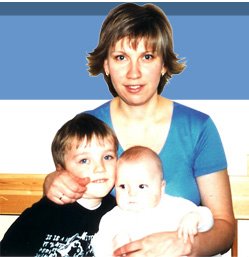
The eXile hates the Moscow Times. In La Russophobe's opinion, whatever faults the Times may have, any single issue from its archives is worth all the eXile issues that ever have been and ever will be published. If the eXile ceased to exist tomorrow, nobody would be the less for it and nobody would care (just the same can be said for the MT's late column by the maniacal Chris Floyd). What's more, the eXile is a profit-making institution, and one of the main ways it seeks to make profit is by helping poor, lonley, pathetic guys like Mr. Ames to hook up with poor impoverished Russian women by featuring advertisements from wedding brokers like this one. In other words, with a certain amount of cynicism (say, the amount Mr. Ames has), you could say Mr. Ames is a pimp.

On the other hand, one must say two things in the eXile's defense. First, it's a quintessentially Russian institution. By that we mean that it's a huge bucket of slop, but every so often if you fish around carefully you can pull out a diamond in the rough. Second, it's being operated at Ground Zero in Russia, and the authors are risking something by publishing some of the things they do. Granted, it's the same kind of risk taken by the morons who film those Jackass movies, not a risk run by courageous patriots out of love for humanity. But after all, risk is risk. For this reason, La Russophobe has a link to the eXile's website. By no means should this link be construed as an endorsement of the site or the publication as a whole, and given what follows there is no way of telling how long she'll be able to justify it.

So, with this in mind, it's time to take the eXile to task. Let's see if they can take it as well as they dish it out (which is rather badly, so it's quite a low standard even the kiddies at eXile should be able to meet).

A new item in the eXile by editor Mark Ames (pictured above) starts like this:

Bush's America has gone from the world's bitch-slappers to the world's bitch-niggaz. That means that even resurgent Russia is causing Americans a serious case of Putin-Envy.
Mr. Ames is a wonderfully educated and erudite fellow, isn't he? You can hardly help but credit every word that follows after a brilliant introduction like that. And at the same time he's so cool and hip, isn't he? Isn't it amazing how he can pull off both of them at the same time? It really makes you stop and wonder what sort of vast right-wing conspiracy is at work for such a genius to have been denied a Pulitzer Prize for so long.

Note to Mr. Ames: Not that you care, but I now think of you as maybe a racist mysogenist, and I have no doubt that many others do as well. If you don't mind leaving that out there, so be it. But maybe you'd like to reconsider and correct this impression in the future?

What proof does Mr. Ames offer his readers of America's newfound jealousy of Russia? It's the article from Newsweek magazine previously published by La Russophobe entitled "Why Russia is Really Weak." There's not a shred of truth in it, Mr. Ames says, and the only reason it appeared in Newsweek was that Americans are consumed by a frenzied jealousy of wonderful Russia and that Newsweek is the helpless pawn of the Republican party and the religious right.

Mr. Ames refers to the authors of the Newsweek article thusly: "Rajan Menon and Alexander Motyl -- a pair of academic beigeocrats with appropriate ethnic names." Beigeocrat is the term Mr. Ames uses for someone who doesn't speak in obsenities . A person who punctuates with four-letter-words like Mr. Ames is a Rainbowcrat, I guess. You know, the kind of rainbows you see when you've sniffed just a tad too much glue. A white-skinned person with a name like "Ames" might worry about sounding racist by using a phrase like "appropriate ethnic names" but luckily for Mr. Ames he is in Russia, so his main concern is probably whether he sounds racist enough.

You see, dear reader, it's like this: Mr. Ames isn't ever going to get published in Newsweek magazine. In fact, he isn't ever going to get published anywhere that matters (and even if he were he'd be instantly forgotten), and that's all that matters to him. He fancies himself a "writer" and he's just sure that he's cleverer than everybody else on the face of the earth, so it really burns him up that nobody with an actual circulation (other than Playboy) will publish him and guzzle down his wisdom like Russians guzzle vodka, but to better effect. He's not going to write the great American novel, or the great Russian novel, in fact not even the great Moldovan post card. In the end, after he found it he just couldn't cut it in America, or any decent country for that matter, he ended up in Russia -- where it's easy for him to feel superior to just about everybody, but after a while that just isn't very satisfying when you've got an ego the size of Mongolia. So then it's time to start spitting crazed poison.

Oh, and quite a lot of poison, too. 4,194 words worth of it. The article in Newsweek that he was responding to was well under 700 words (666 to be exact -- clear proof to somebody like Mr. Ames that it was written by the Devil, I guess). So in other words, Mr. Ames needed more than six words to respond to each one of Newsweek's -- and yet he criticizes Newsweek for needing to insert the word "really" in the title. You spend enough time in Russia drinking the water and listening to the television, and this is what is bound to happen to your "brain."

And you tend to gloss over silly little things like facts when you're "writing" in this state. So, for instance, Mr. Ames fails to let his readers know that Dr. Menon is Monroe J. Rathbone Professor of International relations at Lehigh University in Pennsylvania. He has a PhD from the University of Illinois and a resume of publications as long as your arm (click through on his name for his resume). And likewise he fails to tell his readers (if such there be) that Dr. Motyl holds a PhD from Columbia University and is Professor of Political Science, and Deputy Director of the Division of Global Affairs, and co-director of the Central and East European Studies Program at Rutgers University in New Jersey. Of course, while you're not mentioning facts like those, you also don't mention your own educational credentials -- or lack thereof. According to Wikipedia, Mr. Ames "attended the University of California." But it doesn't say he graduated, or what he studied. He then "played in a short-lived punk band" while he "'lived in poverty and spitefulness with a Czech girlfriend in a suburban California nursing home." Impressive stuff, is it not? Especially compared to the good doctors. Certainly more than enough credentials to opine on Russia's economic condition.

Knowing this, you probably wouldn't have to read through all 4,000+ words "written" by Mr. Ames (as if anyone could, or would) in order to confirm there was no need to read even one of them before concluding that the man (well, very little boy) is really quite insane.

In fact, you probably realized as soon as you saw the opening sentence of Mr. Ames' "work" that the only thing he got right in his crazed diatribe was the importance of jealousy. But not whether America was "jealous" of Russia's $300/month incomes, or its 55 year male adult lifespan, or its universal conscription (and horrific military hazing), or its ongoing war in Chechnya, or its declining population, or its pandemic race violence, or its aid to Hamas and Hezbollah. Because, of course, jealousy of those things doesn't exist. Rather, of course, we're speaking of Mr. Ames' puny, pathetic jealousy of Newsweek, and all the significant publications of the world that dared to refuse him their pages for the dissemination of his brilliance.

If you read Mr. Ames, here's a few of the "facts" you'll learn:
  • Anyone who reads the Wall Street Journal, the Washington Post or the New York Times is a moron. Only those who read the eXile have intellligence.
  • The fact that the Journal, the Post, the Times and Newsweek, to say nothing of not one but two PhDs, agree with each other and disagree with Mr. Ames proves how smart Mr. Ames is.
  • Russia won the war in Chechnya.
  • It's just fine to refer to America as "a nation of Bible-thumping, pious militarists" but if you refer to Russia as "weak" this means "it's okay to hate Russia and to despise it for being weak, because that's all the bastards deserve" (isn't it wonderful how Mr. Ames leads by example?).
  • The Newsweek article by two PhDs is "pathetic" and guilty of "schoolyard-taunting" by including the word "really" in the title but Mr. Ames' article, full of devastating insights like "Fuck no, bitch!" is a work of mature genius.
La Russophobe is informed that David Johnson edited Mr. Ames' piece to remove all the outrageous, childish profanity ("so it can get through spam filters"), while leaving in of course the racist-sounding statement about the professors' names, and then ran it in Johnson's Russia List (the entire boldfaced lead-in appearing at the top of this page was deleted). Sadly, La Russophobe isn't even a little bit surprised. Good old Dave apparently has plenty of time to run any defense of the Putin autocracy he can find (he's got plenty of payback obligations after all the octopus he devoured at Valdai), and meanwhile no time at all to put any coverage of racism in Russia on his website. Hopefully, at least a few readers of the JRL will find time to write Dave and object to the circulation of this pornographic slurry of excrement as part of a so-called serious attempt to "understand" Russia -- and maybe even ask a few questions about how the Valdai Experience has colored the judgment of the JRL, increasingly superfluous in the Internet Age. You know, like how it is that a person who doesn't speak Russian and has never lived in the country manages to edit such a publication. And maybe one or two will even find time to write Mr. Ames and ask how he can possibly allow his "writing" to be published on the JRL by David, one of the world's leading beigeocrats if ever there was one. Not even a little hypocritical? Doesn't Mr. Ames show himself as an Uncle Tomski among the Rainbowcrats?

On the other hand, if Ames is the best (or any) criticism of Drs. Menon & Motyl, they're surely due for a Nobel Prize. And if he's the best friend Russia's got, the poor country is even more doomed than La Russophobe dared to imagine. Maybe that was the point the JRL was trying to make by publishing this drivel. As if.

So now you, dear reader have a choice. You've got a lump of cash in your pocket, and you have to bet it. You can bet on the version of the world etched by Drs. Menon & Motyl (and by La Russophobe every day of the week), or you can bet on the finger painting by Comrade Ames. Think of it like this: You're going to be transported 100 years into the future and dropped into either Russia or the United States, to take up a position in society chosen purely at random, and live in that position for the rest of your life. Which country will you choose?

It's up to you.

In closing, it should be pointed out that La Russophobe has not shied away from making tough criticism of academic analysis of Russia, and it's certainly worthwhile to at least consider the views of someone who is at Ground Zero in Russia, so La Russophobe would be the last one to judge the eXile too harshly. Still, when La Russophobe looks back on her recent criticism of Dr. Stuart Malawer of George Mason University, she feels there is a marked contrast with the eXile's screed. First, Malawer is at least as much of a "beigeocrat" as Menon and Motyl -- yet for some reason the eXile has no problem with Malawer's pro-Russian beigeocracy. Second, La Russophobe didn't need to rely on the cheap, shoddy obscenity that permeates the eXile piece. Third, La Russophobe's analysis is no longer than that of Dr. Malawer. Fourth, her analysis is permeated with hyperlinks to source material contradicting Dr. Malawer. The eXile offers readers virtually no information of this kind, just the wild-eyed views of its author. Fifth, there is nothing in La Russophobe's analysis that disparages higher learning, for which La Russophobe has nothing but the highest respect. The eXile seems to feel that anyone who actually reads books and does research should be shipped of to a gulag.

Still, though, the eXile's tirade is so pathetic, so devoid of meaningful content and so self-indulgently puerile that it actually gives La Russophobe pause. It can't be denied that the eXile's tone was vaguely present in the Malawer piece, and the association is embarrassing. Even though La Russophobe had every right to be outraged at the gross misrepresentations contained in the Malawer piece and to express that outrage, and even though she showed remarkable restraint compared to the eXile's example, maybe she went a bit too far with the tone and not quite far enough in acknowledging Malawer's credentials. She will bear this in mind for future reference. She will not become an eXile. And if the eXile itself can't get a grip, she'll have no choice but to delist them. So it just goes to show that you can learn something even from an idiot.

Shame on you, boys. Get a grip!

Tuesday, September 26, 2006

Georgia Lashes Out at Russia at U.N., Moves Towards NATO

While the maniacal dictators of Venezula and Iran, Russia's allies, were attacking the United States at the U.N. last week, America's new ally Georgia was returning fire against Russia. Kommersant reports on Russia's total foreign policy failure in Georgia, driving the country right into the welcoming arms of NATO:

Saakashvili made his eyebrow-raising appearance at the Friday session of the UN General Assembly in New York. During his 20-minute expose of Russia's destructive role in the restoration of Georgian territorial integrity, he demanded that Moscow withdraw its peacekeeping troops from Abkhazia and South Ossetia immediately, since “their mission has nothing to do with maintaining peace.” Then the Georgian president criticized Kremlin policy toward Georgia. “Those regions,” he said, referring again to Abkhazia and South Ossetia, were annexed by our neighbor to the north, Russia, which supports their inclusion as part of it, intentionally mass issuance of Russian passports in violation of international law… The residents of the disputed regions live under the bandit occupation of Russia. I doubt that there is anyone in this auditorium who would tolerate that type of interference on their territory.”

Saakashvili's strong words were unprecedented. Russia had never been accused of “annexation” before, much less from the floor of the UN. Previously, Tbilisi had criticized Moscow through Georgian Defense Minister Irakly Okruashvili and the fact that such serious accusations are now coming from the head of state is an indication that Georgian-Russian relations have reached a new level of hostility. According to information obtained by Kommersant, the U.S. administration asked Saakashvili to tone down his statements. Nonetheless, such phrases as “bandit occupation” and “accomplices of the Russian peacekeepers” remained.

The Georgian president's boldness is obviously a byproduct of Tbilisi's recent diplomatic victory. Before Saakashvili's UN appearance the top foreign officials of the 28 member states of NATO decided to integrate Georgia more closely into their ranks and approved the transition to a phase of “intensive dialog” with the country.

Former Czech president Vaclav Havel coined the term “intensive dialog.” The phase implies closer integration into NATO and is essentially the penultimate step toward membership in the alliance. The Czech Republic, Poland and Hungary were the first country to complete the intensive dialog phase successfully and the phase has been a mandatory step for all entrants since 1997. Thus Georgia, which has always made its desire for membership clearly known, has received the signal that its wish may become reality. Georgia is the first, and so far only, CIS country that can boast of this close relationship with NATO. NATO's step is exceptional also because one of the conditions for accession to the organization is the lack of conflicts on the territory of the candidate state. Georgia has two conflict zones, Abkhazia and South Ossetia, and armed conflicts breaks out in them from time to time. It seems Brussels has decided to close its eyes to that detail.

Georgian authorities are unabashedly happy and they are certain that nothing will interfere with their speedy progress in NATO. “We are close to NATO membership,” Saakashvili said yesterday as he congratulated Georgian judoists on their victory over their Russian opponents in a world championship finals match in Paris. “The Russian judo team has created certain problems for the Georgian sportsmen, just as Russia is creating problems for Georgia on its way to NATO. But Georgia is already in the semifinal in that question, and nothing will stop it from going to the final.”

The Old Neo-Soviet Switcheroo

Diligent watchers of Russia may recall that some time ago the Kremlin made noise with the claim that Russia's GDP would double in 10 years. Now that this goals has proved, to put it mildly, elusive, the Kremlin has changed its approach, as is evinced from the following report by the Moscow News (pay close attention for the classic Neo-Soviet sleight of hand):

Russian Finance Minister Alexei Kudrin said on Sunday, Sept. 24, that in his opinion it is possible that Russian economy would be equal in strength to the financial systems of the United States of Germany. In an interview with Russia’s Channel One, Kudrin said: “We want to create a system that would be equal in strength to the economies and financial systems of the United States or Germany. I have to say that this distance can be covered in ten years in the country conducts a very skilled financial policy.” Kudrin stressed that over six years — from 2000 to 2006 — Russia has gone up eight levels in the rating system of the world’s largest ratings agency. It started out with one of the lowest ratings, which correspond to financial crisis, and worked its way up to investment-grade rating. The minister noted that it still has seven steps to go to the highest rating, which is held by the United States, France and Germany. To reach this rating is an ambitious task, but one that Russia can surely fulfill, Kudrin said. The Russian minister also stressed that a new default would be impossible in Russia. “There will be no default under any conditions,” Kudrin said. He pointed out that the country has a “serious protection from all kinds of defaults” - the Stabilization Fund, which collects windfall oil revenues. Earlier on Friday, the minister explained that Stabilization Fund will be divided into reserve part, which is going to amount to 7-10 percent of the GDP, and the fund of future generations, which will accumulate all the money above of this sum. “Today we already have a fund with a size of 6.4 percent of the GDP,” Kudrin said on Sunday. He explained that soon the 7 percent of the GDP level will be exceeded and the fund of future generations will be spun off from the Stabilization Fund. “We will put the money in securities that have proved their reliability,” the minister noted.
Did you see it? Smooth, huh? So now we're no longer talking about actual economic growth, we're only talking about Russia's credit rating matching that of the West. In this way, the United States and Germany can be neatly lumped together as a single target for Russia to aim at, even though the economy of the United States is fives times larger than that of Germany.

And what, pray tell, does the government of Russia want to do with a really high credit rating (assuming it can get one -- remember, Kudrin is the man who swore Russia's admission to the WTO was a done deal at the St. Petersburg G-8 meeting, so nothing he says is, excuse the pun, creditworthy)? How will such a credit rating help it to pump oil out of the ground (it clearly has no intention of developing a consumer economy since that would empower a class of entrpreneurs, and it just got finished sending their key figurehead to Siberia)? This remains unclear.

But in any case, it's Russia's plan to have the same credit rating as the United States and Germany some time over the course of the next ten years, while its people continue to wallow in abject poverty and literally become extinct.

Quite some plan, isn't it? La Russophobe dares to wonder what's next, when that too proves beyond Russia's grasp. Maybe Russia will then move on to exceeding Germany and the United States (put together) in consumption of alcohol. But with Russia's recent disastrous failure in trying to impose new alcohol regulations in mind, that too may be a pipe dream.

Russian Bear Devours Russian Stock Market

Investors in the Russian stock market are being battered by tens of millions of dollars in losses.

Last Friday, the RTS Index of the Russian Stock Market fell 2%. In yesterday's trading, the RTS lost nearly 3.5% of its value, plunging from above 1500 at the start of the day's trading to 1450 by its close, as the graph below illustrates:


At the end of August, the RTS Index crested just above 1650, meaning that it has shed 250 points in one month -- over 15% of its total value -- as shown below:


The Moscow Times reported that "investment funds focused on Russia and the CIS lost $11 million in the week ending Wednesday and $18.5 million in the week ending Sept. 13, according to figures from Emerging Portfolio Fund Research."

These losses are coming as the price of oil falls, something Americans are now seeing at the gas pump. As La Russophobe has said before, Russia now has a vested fundamental interest in keeping the price of oil high, meaning that it has a strong incentive to inflate the price of oil by causing turmoil in the Middle East. Thus, it's support for terrorist organizations like Hamas and Hezbollah, as well as for rogue regimes like Iran and Syria, is not suprising. New policies to deal with this worsening horror are needed.

Monday, September 25, 2006

Understanding Russian Racism

Last night yet another dark-skinned foreign student fell victim to race violence in St. Petersburg, supposedly Russia's most enlightened, Western-leaning city. The International Herald Tribune reports:

A group of attackers stabbed an Indian medical student to death in St. Petersburg, the city prosecutor's office said Monday. The sixth-year student from the St. Petersburg Mechnikov Medical Academy died Sunday night after he was stabbed seven times in the chest, said Yelena Ordynskaya, spokeswoman for the prosecutor. Nassor Ali, spokesman for the African Unity group, which represents foreign students in the city, said that Nitesh Kumar Singh had been attacked near the dormitory where he lived. "We are afraid the murder was committed on the grounds of national hatred. There have been similar attacks near that dormitory before, but never with such tragic consequences," Ali said, adding that Singh had been alone. At least six foreigners have been targeted in racially motivated slayings in St. Petersburg over the past year, Ali said. "Our organization wants to protest this situation, when national minorities suffer such attacks," he said. Ordynskaya said prosecutors had opened a murder investigation but had not yet determined possible motives. Russia has seen a marked rise in hate crimes in recent years, which rights groups say is fueled in part by the authorities' reluctance to crack down on hate crimes and tackle growing nationalism. Prosecutions are rare, with many hate crimes treated as hooliganism, an offense that brings only short sentences. Last year alone, 31 murders and 382 assaults were race-connected, according to the Moscow-based Sova human rights center.
What do Russians think about violence of this kind? Here's what a Russian recently had to say about the issue of race violence in Russia:

"Racism and xenophobia are natural residents of the human psyche. (Xenophobia is even necessary, as is the immune system.)"

Who said this? Was it a crazed Russian skinhead? No, it was Alexei of The Russian Dilettante.

Yes, that's right, even supposedly "enlightened" Russians believe that everyone in the world is biologically programmed to be racist, it's perfectly normal. As Alexei puts it: "Blaming ethnic violence on 'latent racism' is like blaming a famine riot on the human need to eat every day." In other words, people need to hate based on race just like they need to eat. Hard to get your mind around a whole country thinking like that, isn't it? But that's what we're faced with.

The Rogers & Hammerstein musical "South Pacific" contains the famous song "You Have to Be Carefully Taught" which runs as follows:

You've got to be taught
To hate and fear,
You've got to be taught
From year to year,
It's got to be drummed
In your dear little ear
You've got to be carefully taught.

You've got to be taught to be afraid
Of people whose eyes are oddly made,
And people whose skin is a diff'rent shade,
You've got to be carefully taught.

You've got to be taught before it's too late,
Before you are six or seven or eight,
To hate all the people your relatives hate,
You've got to be carefully taught.

But "South Pacific" never had a run in Russia, and Russia doesn't have songs like that. Instead, Russians are just carefully taught, just like poor Alexei, from year to year that racism is normal and unavoidable. So the "solution" Alexei proposes is: "To prevent violence, society should at least be able to openly discuss [their] grievances [against the racial minorities]." That's right, deluded little Alexei thinks that Russian race violence is the result of repressed Slavic majority members being unable to fully and publicly vent their view that dark-skinned people are biologically inferior and yet conspiring to steal food out of the mouths of their helpless Slavic victims.

In other words, it has nothing to do with the fact that those Slavs aren't being forced to face the reality of, and take responsibility for, their own failiure. The Slavs are the true victims in Russian race violence, not the dark-skinned people. The root cause of the problem is that the dark-skinned people don't understand THEM, not that they have freely elected a proud KGB spy to rule over them.

And it has nothing to do with the fact that Russians live in a world of total isolation, deprived of real information about how other kinds of people think about things, infused with crazed propaganda from the totalitarians state they have enabled (and even voted for), to the point where they think everyone in the world thinks just like a Slavic Russian. Alexei and those like him really believe they're part of the solution, not part of the problem.

Annals of Cold War II: Now, Russia Sells Missiles to Iran

It's not enough for Russia to sell Iran nuclear technology. Now Russia is selling a missile defense system to be used in shooting down Israeli or American bombers if they try to take out an Iranian facility that is discovered to be producing nuclear weapons. The Moscow News reports:

Russia, pledging to complete the Bushehr reactor, has offered to sell a range of surface-to-air missile systems to protect Iran’s nuclear facilities, the Middle East Newsline reports.Russian diplomatic and industry sources said Moscow has been negotiating to sell Iran a range of anti-aircraft systems to protect Bushehr from Israeli or U.S. air strikes. The sources said contracts could be signed when Bushehr was ready to begin operations in a move expected to take place in late 2007.“Russia has already installed and manned SAM systems around Bushehr,” a diplomatic source said. “The current talks regard an air defense umbrella that would protect all strategic sites in Iran.”In November 2005, Russia reached agreement for the sale of 29 TOR-M1 short-range anti-aircraft systems to Iran in a deal valued at more than $700 million. The sources said Iran has also sought the strategic S-300PMU SAM system, capable of detecting and intercepting enemy aircraft at a distance of 300 and 150 kilometers, respectively.

At the same time, Russia is blocking international action to prevent Iran from using Russian nuclear technology to acquire atomic weapons. This brazen display of Cold War intentions, including nuclear brinksmanship, clearly demonstrates how far detached from reality, and therefore how dangerous, the Kremlin has become.

Sunday, September 24, 2006

Penis Putin, Rat Bastard, Cancels Sunday Funnies

THIS BLOG IS IN MOURNING TODAY

To protest Vladimir Putin's actions in arresting and prosecuting a blogger who dared to satirize him as Russia's "Phallic Symbol," La Russophobe has cancelled the "Sunday Funnies" feature for today. The blogger, Vladimir Rakhmankov, publisher of Kursiv, is one of Neo-Soviet Russia's first true dissidents and a symbol both of tremendous courage and the depths to which Neo-Soviet Russia has sunk.

Vladimir Putin looks like a penis!

If La Russophobe were publishing from Russia, she'd be in jail now for writing that. Think about it. What kind of country is Russia?

Where is the public outrage over this case? Who's next? The blogger's wife and childeren?

And let's not forget that this blogger is getting off easy so far. The Committee to Protect Journalists says that 12 reporters have been murdered in contract hits since Putin took power and not a single killer has been brought to justice.

If La Russophobe were in Russia she could be dead now.

If you want to feel cold chills run up your spine, try to Google up the text of Rakhmankov's story about Putin in English. It should be child's play. La Russophobe still hasn't managed it. Can anyone help? How much do we really care about democracy and freedom of speech?

Here's an excerpt for the time being: ". . . even beasts in Russian zoos responded to his call to breed immediately. Putin looks like the country's phallic symbol, in all senses. So why not secure the symbolism officially.... We can now start producing new souvenirs with the president's head as a penis head." If you can be put in prison for saying this, nobody is safe. Welcome to the Neo-Soviet Union.

You can send e-mail letters of support to Mr. Rakhmankov at vladimir@cursiv.ru

You can send an e-mail to "President" Penis to protest his actions against Mr. Rakhmankov by clicking here.

There's actually even more malevolence here than meets the eye. As the eXile reported, in a prior post Rakhmakov had written about "an aging, privatized water heating plant in Ivanovo that was staying afloat only due to payoffs at the highest levels of Ivanovo's bureaucratic circles." He wrote "that the heating plant artificially inflated local heating costs and accused the former governor of Ivanovo region, Vladimer Tikhonov, of getting 70 million rubles in annual payoffs. Four days after he wrote the article, he got called in for an official meeting by Parnov, the region's press secretary, to discuss 'possible future cooperation.'" He was then assaulted by a gang of goons; so the local officials were just waiting for a chance to lock him up, and killed two birds with one stone when he wrote about Putin. The eXile issued a satirical editorial in support of Rakhamkov in which it wrote about future articles such as "Putin Is A Balding Gaylord, Putin's Petite Penis Plays On, and German Gref Shocker: My Goatee Is Molded From A Cleveland Steamer Putin Laid On My Face. And this is just the tip of the iceberg." Are the eXile's editors next on Putin's hit list? Or are they too obscure and English-speaking for him to bother with until all the Russians are rounded up?

Interestingly, Mr. Rakhmankov penned an article in 2004 which caused an uproar over its alleged anti-Semetic content. But this resulted in no criminal charges. Apparently, the Kremlin has no objections to anti-Semitism, only to anti-Putinism.

A Massive Jolt for Russia in Estonia

On September 23rd the BBC reported that Toomas Hendrik Ilves had been elected President of Estonia. Not only doesn't Ilves speak a word of Russian, he's a former American citizen with a degree from Columbia University in New York City who gave up his citizenship to return home when Estonia obtained its independence in the mid-1990s. In other words, he's a real nightmare for Russia, a clear expression of the Estonian people's remembrance of the barbaric imperialism of Russia during the Soviet era and firm committment not to return that that time if they can help it. Already a member of the EU, Estonia will now move even more rapidly away from Russia's sphere of influence. In November, neighboring Latvia will host the NATO summit.

Once again, we see crazed Russian policy alienating the entire world, most especially its former Soviet peers.

Saturday, September 23, 2006

Neo-Soviet Paranoia Sets In

The Associated Press reports that Neo-Soviet paranoia has begun to blaze in full horrifying glory (the sad thing is, if this report were true it would be the best possible news for Russia; but the hope that the West will actually be wise enough to pursue such a policy is faint indeed).


Russian Experts:US To Work For Quiet Revolution In Russia


MOSCOW (AP)--Russian experts have warned legislators that the U.S. could sponsor efforts to undermine the Kremlin and help bring pro-Western forces to power in Russia, a newspaper reported Thursday.

Valentin Falin, a former top Soviet Communist Party official, and retired Lt.- Gen. Gennady Yevstafyev, a former top intelligence official, wrote in a confidential policy paper that the U.S. was likely to launch a series of moves over the next two years to weaken President Vladimir Putin's government, the daily Nezavisimaya Gazeta reported.

Russia is due to hold parliamentary elections in late 2007 and the presidential ballot in spring 2008.

The paper said that the U.S. could encourage corruption allegations against top Russian officials and businessmen, try to freeze some Russian assets in the West by court rulings, refuse to recognize election results, increase support for the independent media and opposition and even encourage regional separatism.

The Interfax news agency said the paper was circulated in both houses of the Russian parliament.

Falin and Yevstafyev said that the U.S. hopes to encourage "a covert regrouping of forces within the top echelons of the Russian leadership as well political and business elites that would pave the way for a 'quiet' Orange Revolution, Russian style," Nezavisimaya Gazeta said.

Russia has accused the U.S. and other Western nations of sponsoring the 2004 Orange Revolution mass protests against election fraud in Ukraine that helped Western-leaning Viktor Yushchenko defeat a Moscow-backed rival. Similar mass protests also helped oust unpopular governments in two other ex-Soviet nations, Georgia and Kyrgyzstan.

Pro-Kremlin analysts have repeatedly accused the U.S. of harboring plans to encourage a similar regime change in Russia.

Falin and Yevstafyev both have kept a relatively low profile and have never been considered close to the Kremlin.

Yevstafyev, a former head of department at Russia's Foreign Intelligence Service, is an expert on nonproliferation of mass destruction weapons and currently works as a consultant for the Moscow-based independent think-tank PIR- Center.

Falin, 80, served as the Soviet ambassador to Germany in the 1970s and later held senior positions in the Soviet Communist Party leadership.

The Interfax news agency quoted the paper as saying that the U.S. policy was rooted in "the United States' refusal to put up with Russia's growing role on world markets as a sovereign center of force."

The allegations come amid a growing chill in Russian-U.S. relations caused by differences over global crises and U.S. concerns about the Kremlin's backtracking on democracy at home and strong-arming post-Soviet neighbors.

While Putin emphasizes that Russia wants to remain a partner of the U.S. in what Washington calls the global war on terror, he has rejected Western criticism of Kremlin's policies and vowed to strengthen Russia's military might.

Blogs Under Assault in Russia


The
Moscow News reports that the editor of the Russian blog Kursiv (pictured) is now on trial for criminal charges as the result of writing an article referring to President Putin as his nation's Phallic Symbol. The Committee to Protect Journalists has protested the outrage. If La Russophobe were in Russia, apparently she'd be under arrest now too -- and who knows who else. Welcome to the Neo-Soviet Union!

The Committee to Protect Journalists is deeply concerned by the prosecution for criminal insult of a Russian journalist who satirized President Vladimir Putin’s campaign to boost the birth rate, the group said in a statement published on its official website.

Vladimir Rakhmankov, editor-in-chief of the independent news Web site Kursiv, went on trial today in the city of Ivanovo, northeast of Moscow, charged with insulting the president in a May article titled “Putin as Russia’s phallic symbol.” The article satirized Putin’s goal, outlined in the president’s state of the nation address in May, of increasing Russia’s population.

If convicted under Article 319 of Russia’s criminal code, “Insulting a Public Official,” Rakhmankov could face up to 12 months of corrective labor. Local prosecutors brought the case without the involvement of Putin or presidential representatives, according to local press reports.

“It is outrageous that local prosecutors should bring the full force of the criminal law to bear on a journalist for writing a commentary on the public policy of an elected politician,” said CPJ Executive Director Joel Simon. “Prosecutors should never resort to the criminal law to shield public figures from the press. Satire is an essential and vital element of democratic discourse. We call on the authorities to halt the prosecution of Vladimir Rakhmankov immediately.”

On May 19, investigators from the Ivanovo regional prosecutor’s office raided Kursiv’s newsroom, seized computers, and searched Rakhmankov’s apartment, confiscating his personal computer. Kursiv was forced to change Internet providers after its previous provider halted service following the Putin article.

The criminal insult charge follows the publication of several articles critical of the local governor, Mikhail Men, on the Kursiv site. On March 15, Rakhmankov went to meet with the governor’s press secretary, Andrei Parnov. When he arrived, an unidentified man walked out of Parnov’s office and hit Rakhmankov several times, according to the Moscow-based press freedom group Glasnost Defense Foundation. On March 17, Rakhmankov filed a complaint with local prosecutors but they refused to take up the case, the news Web site Lenta reported.

More On Bakhmina


Jeremy Putley provides the following additional information on the Bakhmina story:

President George W Bush was told in person about the case of Svetlana
Bakhmina when he met with “embattled activists” in
St Petersburg last July. Irina Yasina, head of the NGO Open Russia, “appealed to Bush to raise with Putin the case of Svetlana Bakhmina, 36, a former attorney at Khodorkovsky’s oil company…. Yasina called the allegations bogus.” This quote is from the Washington Post. “Bush said later that he promised the activists he would convey their concerns to Putin”, whom he called his friend. It appears that, whatever President Bush told Putin, it was not sufficient to reverse or in any way mitigate this vicious and brutal miscarriage of justice.

Because it was and remains a miscarriage of justice. The embezzlement of which Svetlana was accused did not really happen, according to a Kommersant-Vlast article. “Svetlana Bakhmina was a mid-level manager: deputy head of the legal affairs department at YUKOS. Why has she been sentenced to seven years? The court gave her two years on a charge of large-scale tax evasion, but the main charge, which increased the sentence to seven years, was conspiracy to commit major fraud in relation to the property of the Tomskneft oil company. Bakhmina was also charged with coming up with the scheme for transferring Tomskneft assets abroad. Yet the "victim" in this case – Tomskneft - hasn't filed any complaints; on the contrary, it says that all its assets are safe and well.” The victim of the alleged embezzlement says it has no loss and no complaint against Svetlana. Here is the article in full.

Kommersant-Vlast
April 24, 2006
A VICIOUS SENTENCE
The YUKOS affair isn't over yet
Author: Mikhail Fishman

[Svetlana Bakhmina, formerly a YUKOS corporate lawyer, has been sentenced to seven years in prison. Many are surprised by the severe sentence, especially since Bakhmina has two young children. But this sentence is an object lesson: it's intended to demonstrate that the YUKOS case isn't closed.]

Like other arrested YUKOS personnel, Svetlana Bakhmina has received a harsh sentence, making her ineligible for any amnesty: seven years in prison. As in the case of Mikhail Khodorkovsky and Platon Lebedev, the court sided with the prosecution completely, ignoring all the arguments of the defense, and showing showed some token independence and humanity by disagreeing slightly with the prosecution on the severity of the sentence. Thus, it only confirmed that the prosecutor plays the leading role in Russian justice today.

Svetlana Bakhmina was a mid-level manager: deputy head of the legal affairs department at YUKOS. Why has she been sentenced to seven years? The court gave her two years on a charge of large-scale tax evasion, but the main charge, which increased the sentence to seven years, was conspiracy to commit major fraud in relation to the property of the Tomskneft oil company. Bakhmina was also charged with coming up with the scheme for transferring Tomskneft assets abroad. Yet the "victim" in this case – Tomskneft - hasn't filed any complaints; on the contrary, it says that all its assets are safe and well.

This concerns the assets of Tomskneft-VNK, taken over by YUKOS. The management of VNK resisted the takeover; it used a technique that was widespread in the late 1990s - making up a fictitious debt for the company, so that VNK appeared to owe somebody $440 million. All the same, YUKOS succeeded in acquiring the controlling interest. It refused to pay the fictitious debt, and transferred the assets of VNK enterprises to offshore zones. When the state, a minority shareholder in VNK, called on YUKOS to account for the transfer, YUKOS explained that it was a safeguard against attacks on the company by the fictitious creditors. All the enterprises in question were returned to VNK ownership almost a year before the auction at which YUKOS bought out the state's remaining stake in the company - at a fair market price, as the state later acknowledged.

Obviously, YUKOS was an aggressive player - but regardless of its intentions, no assets were stolen. Nevertheless, Tomskneft (contrary to its wishes and to common sense) has been declared a victim, the temporary transfer of assets has been defined as theft, and the lawyer who carried out the orders of the company's real owners has been identified as the mastermind of the operation. And everyone understands that Svetlana Bakhmina, an ordinary manager from Moscow , is going to jail not because she's a thief, but because she worked for YUKOS, and because things happened to turn out this way - she's simply been unlucky. Yes indeed, just unlucky, since no one has any doubts that the target of Vladimir Putin's political campaign against YUKOS was the oligarch Khodorkovsky, not rank-and-file YUKOS personnel.

If Bakhmina had been sentenced to no more than the time she has already spent in pre-trial detention, or given a suspended sentence of a few years, public opinion would surely have responded with relief - insofar as it cares about Bakhmina at all. This would have been perceived as the state being merciful. After all, people feel sympathy for Bakhmina; not everyone, but many do. A year ago, when Bakhmina had already been arrested, even some members of United Russia's right wing expressed the opinion that the authorities should stop going after rank-and-file YUKOS personnel. Neither was there any particular practical sense in convicting and jailing Bakhmina.

But the state remained adamant, and everyone understands that Bakhmina's sentence is politically motivated. It's an object lesson, precisely due to its excessive severity - intended to show that justice is unconditional, taking no notice of titles or merit. The sentence seems to assert that the YUKOS case is nothing personal, and that Khodorkovsky, with his billions, is neither a victim nor a target, but a participant in an extensive crime ring. He has been sent to prison. So has his partner, Lebedev. Alexei Kurtsin, a petty clerk at YUKOS, was given 14 years for money- laundering, even though the prosecution actually asked for a lighter sentence (an unprecedented event).

But this isn't just a matter of the state sending the message that everyone is equal before the law. These show trials aren't about legality at all. They're about public morale. Any leniency with regard to Svetlana Bakhmina would have been revealing too, of course. It would have been a signal that the YUKOS page has been turned; that's enough, we're through with all that, let's return to a peaceful existence. Not generalized words from meetings and addresses to parliament, but a specific gesture that would have made people breathe a surprised sigh of relief: believe it or not, Bakhmina is free!

But the state has chosen to send a different message. For the repressive justice mindset which has been victorious in the YUKOS affair, there is no such thing as a minor, forgivable crime. There are only crimes that haven't been investigated yet.

LR on PP

Check out La Russophobe's latest installment on Publius Pundit, dealing with the question of whether Russia should be admitted to the World Trade Organization. Reader comments on this vital issue are welcome.

Friday, September 22, 2006

Russia Brutalizes Women

A new report from the United Nations excoriates Russia for its brutality against women. La Russophobe has already reported that Russia has the second-highest rate of divorce in the world and that one Russian woman is murdered by her husband every 40 minutes. Now the U.N. concludes that Russia is also brutalizing women economically: "In the Russian Federation, the adverse impact of political and economic transition had disproportionately affected women." The report includes Russia with a group of barbaric regimes known for shocking abuse of women: Iran, Mexico, Afghanistan and Sudan’s Darfur region.

In classic Neo-Soviet fashion, rather than acknolwedge Russia's problems with the abuse of women (leading to chronic shortalls in population), the Kremlin sought to paint the U.N. as a bunch of crazed russophobes. The Russian envoy to the U.N., Valery Loshchinin, called the report "politicized" and complained that "it gave the impression that there was a State policy of violence against women, which was occurring against a background of prevailing insecurity at large." He stated that "those familiar with the contemporary reality in Russia and the role of women in society could not accept these affirmations."

This is through-the-looking-glass, Neo-Soviet stuff. Loshchinin simply ignores basic facts about Russian life known by everyone, as if he were still living behind the Iron Curtain's cloak of secrecy which prevented those in the West from disputing many Russian propaganda assertions. Just as in Soviet times, the regime simply refuses to acknowledge problems and therefore can't reform to alleviate them. The problems fester and grow until the consume the nation's vital organs and destroy it.

Ironically, even as Loshchinin was speaking it was being reported that Russia is considering imposing a tax on women who don't have children so as to penalize them and force them to contribute to the population (apparently, the Kremlin has already given up on the idea that women could be bribed into having more babies). Heaven forbid that Russia should change to make women happier and more desirious of having children; instead, Russia prefers to resort to the methods of Stalin, the same ones that destroyed the USSR and will just as surely bring Russia to her knees.

Putley on Bakhmina

David McDuff's blog One Step at a Time contains a letter from reader Jeremy Putley to the Financial Times regarding the Kremlin's assault on Yukos attorney Svetlana Bakhmina. Bakhima's story is that of one of Neo-Soviet Russia's first victims, and it is a cause that deserves ongoing attention. Jailing the lawyer of a person the state doens't like is a signal hallmark of crude authoritarian dictatorship and demonstrates that nobody is safe from the Kremlin's petulant, wrath, just as in Soviet times.

Putley writes as follows (shame on the FT for failing to publish it!):

Sir

In your second editorial today you are right to say that investors presented with the opportunity to buy into Russia’s oil riches, in the planned stock market flotation of Rosneft, must consider the moral dimension. It is not only the question of whether they will be buying “stolen goods”. There is also the matter of the abuse of legal process to persecute former Yukos employees, and not just Mikhail Khodorkovsky.It has not been widely reported that last week the Yukos lawyer, Svetlana Bakhmina, was sentenced by a Moscow court to seven years imprisonment in a labour camp. She had denied any wrongdoing. Now 36, she has been detained since 7 December 2004, and has not been allowed to see her two children, aged 3 and 7 in that time. Bail was refused for apparently no justifiable reason.The Russian opposition politician, Boris Nemtsov, is reported as saying that Ms Bakhmina does not deserve the sentence, which he calls an act of repression, considering it part of a campaign by the Kremlin aimed at intimidating business employees in order to prevent them from expressing independent views on society in Russia.This appalling case of abuse of legal process in a European capital should arguably carry rather more weight withinvestors even than the other matters that arise in considering potential investment in Russia, such as the unexplained exclusion from Russia of the investor Mr William Browder.

Jeremy Putley

McDuff continues the Bakhmina saga as follows:
Svetlana Bakhmina, the YUKOS lawyer sentenced to six and a half years of imprisonment in a labour camp, has appealed to a Moscow court to have her sentence deferred for nine years, until her youngest child reaches the age of 14, gazeta.ru reports. Public figures and human rights activists in Russia have condemned the sentence given to Ms. Bakhmina, saying that she does not deserve it. Ms. Bakhmina herself has denied any wrongdoing. The Russian opposition politician Boris Nemtsov has called it an act of repression, considering it part of a campaign by the Kremlin aimed at intimidating business employees in order to prevent them from expressing independent views on society in Russia.
It is truly mind-boggling the Kremlin could be so weak and cowardly that destroying Mikhail Khodorkovsky's company, himself and his family would not be enough; just like the mafia, the Kremlin cowards need to go after everyone associated with him, even the mothers of young children. More terrifying, the Kremlin couldn't care less about the public image this presents or how many nations and peoples it alienates in doing so. In other words, this act is an unmistakable echo of the way the USSR treated people like Solzhenitsyn, clear proof that Russians have learned nothing from the decades of despair they suffered under Soviet rule.

NB: No page exists in Wikipedia for Ms. Bakhmina. La Russophobe suggests to readers that somebody take the initiative to create one (anyone can do it, everyone can edit/help).


Brilliant Felgenhauer Exposes the Horrors of Iran-Russia Alliance

Writing in Eurasia Daily Monitor, the brilliant (essential!) Pavel Felgenhauer exposes the prospects of a Russian-Iranian nuclear alliance. David McDuff has a wonderful, awful post analogizing the recent spewing of venom into the U.N. by the Iranian and Venezuelan dictators to the similarly lurid acts of Nikita Krushchev decades ago. Instead of using their U.N. platform as an opportunity to call for peace and cooperation pursuant to the U.N. mandate, these maniacs chose to use it as an opportunity to provoke war (the height of hypocrisy, as they attack the U.S. for doing so). But we must now ask whether today's Russia is any different, indeed much worse. However revolting the behavior of the other maniacs may be, at least they were open and honest in their barbaric warmongering. Vladimir Putin is supplying a massive amount of assault weapons and attack aircraft to Venezuela and nuclear power to Iran, even as he poses publicly with a face of respectability. As Felgenhauer shows below, it is a hop, skip and jump from Russia's support for Iran to its obtaining nuclear weapnos. So, who is more dangerous to democracy - Putin or Kruschchev?

Here's Pavel (how the Moscow Times dared to fire him, La Russophobe will never understand):

On Monday September 18, the chief of the Federal Atomic Energy Agency (Rosatom), Sergei Kiriyenko, told reporters in Vienna that Iran’s Bushehr nuclear power reactor will be operational by September 2007 and is scheduled to begin producing commercial electric power in November 2007. Kiriyenko also confirmed that Iranian Vice President Gholamreza Aghazadeh, chief of the Atomic Energy Organization of Iran (in charge of Iran's nuclear program), will visit Moscow next Monday, September 25, to finalize agreements to launch the Bushehr reactor (RIA-Novosti, September 18).Bushehr was partially constructed in the 1970s by Germany's Siemens and abandoned unfinished after Iran's Islamic Revolution in 1978. The Russian company Atomstroiexport has been rebuilding Bushehr for over 10 years.

It has been reported that today the reactor is over 90% complete, although the previously announced launch date of October 2006 will pass without the reactor becoming operational. Now Kiriyenko insists that the new September 2007 deadline is final (RIA-Novosti, August 29, September 18).Sources at Atomstroiexport say the long delay in completing Bushehr has been simultaneously technical, political, and financial in nature. In the 1990s when oil prices were low, Iran was not paying Atomstroiexport and its Russian subcontractors on time or in full for services rendered.

Nowadays most of the $1 billion stated Bushehr price tag has been already disbursed by the Iranians to Russia, according to former Atomstroiexport officials, including former CEO Kakha Bendukidze, a well known Russian industrialist in the 1990s and early 2000s and, since 2004, a Georgian government minister.With the financial problems ostensibly solved, Kiriyenko has blamed technical difficulties, including the failure of Russian subcontractors "to deliver some assembly units" (RIA-Novosti, August 29).

At the same time, it is clear that there are serious politics involved: While there is no internationally acceptable solution to the Iranian nuclear problem, Moscow has apparently been dragging its feet in making the final, irreversible step of actually launching Bushehr -- a step that could provoke a major Russo-American crisis.For some time now, the Iranians have pressed Moscow to deliver the nuclear fuel rods for Bushehr well ahead of the reactor launch. The fuel -- some 100 tons of low-enriched uranium -- is ready for delivery and is currently stockpiled at a Rosatom plant in Novosibirsk. The fuel must be delivered to Iran to be loaded into the reactor at least several months before it may be launched, and that is when the principal Russo-American problems may begin.

Most nuclear experts agree that the nuclear arms proliferation threat posed by the light water Bushehr VVER-1000 (1,000 megawatt) reactor is limited: It will produce tons of plutonium, but consisting of an isotope mix that cannot easily be used to make bombs. Moscow has also secured an agreement with Tehran that the spent fuel must be sent back for reprocessing.However, plutonium is not the only proliferation danger. Iran today ostensibly possesses all the technologies needed to enrich uranium, but the principal problem is that it lacks uranium to enrich. Any natural uranium deposits that have been so far discovered in Iran are small, while the United States has up to now managed to block all attempts by Tehran to buy natural uranium oxide (yellow cake) on the world market.

The arrival of the Russian nuclear fuel may drastically change the situation: By diverting a relatively small fraction of the 100 tons of the 4% enriched uranium 235 fuel, the Iranians could dramatically speed up their nuclear program and produce hundreds of kilos of arms-grade uranium (over 90% enrichment) in a year or so, using a limited amount of enrichment centrifuges. It is technically much easier to move from 4% to 90% enrichment, than from 0.7% as in natural uranium, to 4% and a nuclear weapon requires only 20 kilos of arms-grade uranium to make.Washington has already told Russia that, while the continued slow construction of Bushehr is OK, the actual transfer of nuclear fuel without a comprehensive solution of the Iranian nuclear problem is unacceptable. Will the Russians heed this warning?

While in Palestine on September 8, Foreign Minster Sergei Lavrov angrily told a news conference that it is "a clear provocation" to suggest that Russia may stop constructing Bushehr and move its specialists out (RIA-Novosti, September 8, 2006).The pro-Kremlin news site Strana.ru reported on September 11 that Russia will not only sell Iran modern anti-aircraft Tor-M1 missiles (a billion-dollar deal announced last November), but also provide more powerful, longer range S300 anti-aircraft missiles and other modern weapons "needed to defend Bushehr and other strategic targets" against possible U.S. air and missile attacks.It is obvious that at least part of the ruling Russian elite is ready to openly side with Iran against the United States, to block the imposition of any sanctions in the United Nations while providing Tehran with modern weapons and nuclear materials. But will Russia's ultimate decision-maker, President Vladimir Putin, risk a showdown? Up to now Putin has opted to postpone a decision, which has meant Bushehr has also been postponed. But the time for pondering is rapidly running out, and Washington and Tehran are both pressing for a clear answer -- something Putin always hates to give.

Russia’s Report Card Shows it Needs to Repeat a Century, not Skip One

A string of high-level surveys of social development over the past year have equated Russia’s level of achievement with that of the African nation of Niger, a landlocked sub-Saharan state of 14 million roughly half of whose national budget is derived from foreign aid.

In October of last year the “Corruption Perceptions Index” from the German think tank Transparency International surveyed 159 nations and found that only 30 (less than 19%) were less corrupt than Russia. Russia found itself tied for 9th most corrupt nation in the world with Niger and Sierra Leone.

Then in June, Foreign Policy’s “Failed States Index” for 2005 identified sixty such “failed states” based on various indicators of instability, and Russia was named as one of them. Only 43 nations in the world are bigger failures than Russia according to Foreign Policy. Laos was a slightly bigger failure than Russia, Niger slightly less. Criteria such as human rights, distribution of wealth, flight, police corruption and elitism were reviewed.

And now last week came the World Bank with its “World Governance Indictors” reports, providing results eerily similar to those of TI. The WB study covered over 200 or more countries and territories in each of several categories. Only 57 nations out of 208 surveyed (less than 28%) had lower scores in such areas as voice and accountability, political stability, effectiveness of the government, the quality of regulatory bodies, the rule of law and control over corruption. Here, Russia was trailed Zambia (148), Uganda (149) and Swaziland (150), with Niger (152), Kazakhstan (153) and East Timor (154) just behind it.

When three different studies from three different well-respected organizations spanning the globe all find that Russia’s government and that of Niger are closely linked in terms of their level of accountability and systemic corruption, you know they are on to something. And a question inevitably arises: Is it an oversight that Niger has been excluded from the G-8, or is it an oversight that Russia has been let in?

To be sure, Russia has nuclear weapons. But so do India and China, and they aren’t members of the G-8. True, Russia has oil. But Saudi Arabia pumps out just as much, and its reserves are far larger than Russia’s and far easier to reach. Yet, Saudi Arabia isn’t in the G-8 either. If every nation with some type of claim is admitted, the G-8 will become the United Nations.

Why then admit Russia, especially when so many Russian actions betray hostility to the organization principles of the G-8? Russia is providing nuclear technology to Iran, assault weapons and attack jets to Venezuela and financial support to Hamas. It has obstructed the efforts of the other G-8 nations to impose sanctions on Iran and it has obstructed their efforts to deal with the terrorist uprising in Lebanon directed by Hezbollah. Russia refuses to recognize either Hamas or Hezbollah as terrorist organizations. Russia provided U.S. military secrets to Sadaam Hussein during the war against Iraq and it is violating its treaty with the U.S. concerning nuclear missiles on submarines. It is seeking to oust U.S. oil interests from Russia, most recently those of Exxon. It has been condemned by a resolution of the U.S. Senate for its failure to protect the civil rights of journalists and it recently announced that it will not bow to the United Nations within its sphere of influence in the former USSR. It is brazenly interfering in the domestic politics of Moldova, Georgia and Ukraine as well as those of Belarus and the Baltic nations. Violent racism is running rampant (incidents increase by 20-30% each year) and Soviet-era ideology is on the rise. Russian energy monoliths, particularly Gazprom, are being used for political advantage without regard to the economic rights of their shareholders.

It’s time to wake up and realize that there is a fox in the G-8 chicken house. Saying that some sort of leverage may be gained over Russian policy if it is “at the table” might just as well have justified admitting the USSR to NATO or the Cosa Nostra to the College of Cardinals. It’s time to understand that the old canard about Russia needing “time” to develop into a progressive state has been repeated for centuries now without results. Not only won’t time heal any wounds in Russia’s case, but even if it could it’s a luxury Russia can’t afford. Every year the country’s population gets smaller and more unhealthy (by 2020 10% of the population will have HIV), so by the time sufficient time has elapsed there may be nobody left to benefit from the changes.

Instead of demanding that Russia repeat the grades it has failed, we are allowing Russia to skip grades it isn’t even ready for and go from elementary school to MIT. No good can come of that. Russia’s low scores come in a climate of rising oil prices and impressive GDP growth; when the business cycle strikes Russia and the Kremlin is forced to play hardball to keep control, Russia’s scores will be off the charts and the world will have a disaster on its hands.

Thursday, September 21, 2006

Motley Fool Blasts Crazed Putin Autocracy

The Motley Fool investment gurus lay waste to the lunatic adminstration of Vladimir Putin in the following scalding assault on the Kremlin's recent spate of efforts to undermine the rule of law and property rights in Russia. Russia is totally destroying its credibility with the outside world, and perhaps it is an intentional effort to codify xenophobia and drive all foreigners from Russia.

"All I really need to know, I learned in kindergarten," goes the saying. Here, at least. Over in Russia, I'm guessing it goes more like: "What I didn't learn in dyetsky sad, I never learned."

Case in point: Russian President Vladimir Putin, who's acting less like a "Vladimir" and more like a tantrum-throwing "Vova" with every passing day. In the latest fit of presidential petulance, The Moscow Times reports that the Kremlin has apparently tried to pull out of a deal for Russian national carrier Aeroflot to purchase 22 Boeing (NYSE: BA) 787s, to counterbalance a similar deal to purchase 22 Airbus A350s. The original plan was for Aeroflot, which is controlled by the Russian state, to make purchases from both of the world's dominant large aircraft-builders, playing one against the other in pricing negotiations.

Back in February, the strategy bore initial fruit as Aeroflot extracted a $100 million discount on its $3 billion purchase from Airbus. Subsequently, Aeroflot got an even better deal out of Boeing, which offered its 22 Dreamliners for just $2.5 billion (about a $220 million discount). Then things got ugly.

First, the Bush administration proved reluctant to accede to Russia's bid for entry into the World Trade Organization. Then, the administration up and levied sanctions against Russian defense contracting powerhouse Rosoboronexport and military jetmaker Sukhoi, over alleged assistance these firms provided to Iran's nuclear program. Neither move endeared the Americans to President Putin, and in an apparent tit-for-tat move, Aeroflot suddenly decided to postpone its purchase of the Boeing planes indefinitely. This put the sale in jeopardy and, according to Russian oligarch Alexander Lebedev, would force Aeroflot to acquire the needed planes elsewhere, at a cost of as much as $3.3 billion -- further illustrating just how important it is for Aeroflot to maintain two price-competitive providers for its planes. Luckily for Aeroflot (and Boeing), Lebedev stepped up yesterday, and had one of his other companies advance $40 million to Boeing to hold Aeroflot's place in line to buy the 787s until the end of this year.

Meanwhile, in Siberia
The situation in Moscow bears an eerie resemblance to recent developments on the other side of the country. Over on the eastern island of Sakhalin, home to two oil and gas "production-sharing" projects titled Sakhalin-1 and Sakhalin-2, Western oil majors Royal Dutch Shell (NYSE: RDS-A) and ExxonMobil (NYSE: XOM) are butting heads with Russian regulators who allege that the companies are violating environmental regulations, and threaten to revoke their licenses. Analysts are pretty unanimous in their opinion that the regulators are less concerned with the environment, and more concerned with renegotiating the firms' production-sharing agreements to give the Russian state a larger share of the loot.

The unhappy moral of this story (for investors): Beware of investing in Russia. Certain children over there have difficulty playing nice with others, and sharing their toys.

For an alternative conspiracy theory (can you ever have too many?) on why Russia might want to cozy up to Airbus at Boeing's expense, read about Russia's recent investment in Airbus parent EADS.

Exposing Russia's Fundamental Weakness

Reader Jeremy Putley points us to a recent article from Newsweek in which the authors expose the fundamental sham that is the Russian economic, and indeed political, system (something La Russophobe has been pointing out for some time now). The fact that even the mainstream media is catching on just goes to show how Neo-Soviet propaganda will have a much tougher row to hoe than the original.

Why Russia Is Really Weak

What happens to Russia when—not if—oil and gas prices begin to retreat?

By Rajan Menon and Alexander Motyl

Newsweek International

Sept. 25, 2006 issue - News stories about Russia these days follow a predictable theme. The country is resurgent and strong, and the West must adjust to this new reality. But that story line is wrong. Russia is weak and getting weaker.

Take the conventional index of power—military might. Yes, Moscow is testing advanced missiles systems and talks buoyantly about countering a U.S. antiballistic-missile system with a new generation of warheads that can evade interceptors. Yet note the failure earlier this month of the highly touted Bulava submarine-launched missile. The United States experiences such mishaps, too, of course. But in Russia they are signs of something deeper. It's no secret that, for all Russia's new oil wealth, its Army remains poorly trained, malnourished and demoralized. Alcoholism, suicide and corruption are rife. Weaponry is aging and newer models arrive at a trickle: India has bought more Russian tanks since 2001 than the Russian Army.

Russia gets credit for economic growth—nearly 7 percent this year, according to the IMF. But the boom has been propelled mainly by rising energy prices. What happens when—not if—oil and gas prices begin to retreat? New investment in production capacity is insufficient to sustain current levels of exports. Meanwhile, economic reform has stalled, state control over strategic economic industries has increased and foreign investment remains low. Of the $648.1 billion in foreign investment worldwide in 2004, only $11.6 billion went to Russia. Not surprisingly, Russia rates poorly in globalization rankings. The 2005 Foreign Policy/A.T. Kearney survey placed it 52nd in a list of 62 countries—a drop of five places from 2004.

Russia's human capital is being ravaged. The population is declining by some 750,000 annually because of low birthrates and unusually high death rates among males; it's also aging rapidly and will therefore become increasingly less productive. Alcoholism remains pervasive, as does drug use. Russia has the highest rate of tuberculosis in Europe. AIDS has yet to crest. Suicide is one the rise. According to WHO data on 46 countries between 1998 and 2003, Russia, with 71 cases per 100,000 of the male population, topped the list.

A nation's power also rests on the strength of its institutions. Here, too, Russia is growing weaker. Putin's authoritarianism has brought order to a once chaotic political scene. But Parliament has been neutered. So have independent civic organizations, political parties and media. The secret police, military and security services—no friends of the rule of law—occupy prominent political positions. Official corruption flourishes.

Abroad, Russia's influence continues to ebb. Its closest allies—Kyrgyzstan, Tajikistan and Uzbekistan—are poor and politically unstable. Energy-rich Kazakhstan and Turkmenistan resent Russia's grip on their exports. Armenia, loyal but penurious, remains embroiled in the Nagorno-Karabakh conflict with increasingly prosperous Azerbaijan. The Kremlin's meddling in Georgia has deepened Tblisi's determination to join NATO and strengthened anti-Russian sentiment. Belarus's dictatorial president envisions union with Russia, but his Soviet-style political order repels many ordinary Russians.

On the wider global stage, Putin displays seeming strength and new confidence. Russian support is key to the negotiations over Iran's nuclear program. Its Security Council veto gives it an important say on various international issues, from Kosovo's independence to the United Nations peacekeeping force in Lebanon. Yet Putin's rhetoric increasingly strikes themes of Great Russia—imperial, nostalgic, nationalistic. However much it resonates with a particular Russian political class, that rhetoric can itself breed weakness.

You see this in the sharp rise of race-related hate crimes in Russia, most recently the clash between Russian xenophobes and Chechens in the north- western town of Kondopga, when a bar brawl triggered huge rallies of ultranationalists demanding the expulsion of ethnic minorities. Right-wing racism and Russia-for-Russians chauvinism augur ill for a multiethnic, multiconfessional Russia, which has near 25 million Muslims.

So, the received wisdom is wrong. What the West must live with is a weak Russia. And history shows that states that talk loudly while carrying a small stick often overreach, creating problems for themselves and others.

Wednesday, September 20, 2006

Blog vs. Blog: Just the Facts, Please

Here's what wacky Wally Shed of the Accidental Russophile recently wrote to La Russophobe in a comment on this blog: "This will be the last time you'll hear from me on this embarassment that you call a 'blog'." This came after he called La Russophobe an "idiot." Which came just before he attacked La Russophobe for "hatemongering." Isn't that ironic. As for the first sentence, here are some statistics comparing the "embarrassing" La Russophobe to Wally's cauldron of outrageous America-bashing propaganda, enabling the rise of dictatorship in Russia.

As of 9am E.S.T. Wednesday September 20:

LA RUSSOPHOBE

11,500 visits in six months or 1,918 visits per month

THE ACCIDENTIAL RUSSOPHILE

11,793 visits in seven months or 1,710 visits per month

LA RUSSOPHOBE

182 links from blogs in six months or 30 links per month.

THE ACCIDENTAL RUSSOPHILE

134 links from blogs in seven months or 19 links per month

LA RUSSOPHOBE

33 linking blogs in six months or 6 linking blogs per month

THE ACCIDENTAL RUSSOPHILE

52 linking blogs in seven months or 7 linking blogs per month

In other words, in every category La Russophobe either vastly exceeds or nearly matches Wally's blog, which is much older than hers. So if this blog is an "embarrassment" then what can we say about the Wallygator's efforts? Ultraembarrassing? Wally's counter registers only slightly more total visits than La Russophobe even though Wally's blog has existed 30% longer than hers has, and he has signifantly fewer views of his profile.

So La Russophobe can't help but wonder . . . is he jealous, or is he just trying to wipe the truth off the face of the earth? In a post about American propaganda on Russia, Wally vehemently condemns American "ignorance." In a post about Russian propaganda on America, he asks the reader to decide whether Russian propaganda is right or wrong. So La Russophobe will let the reader decide about Wally's motivations.

Neo-Soviet Russia Obliterates Property Rights, Alienates Entire World

Previously, La Russophobe reported on how Russia was breaching its contract with the Exxon oil concern, alienating vast swaths of power in the United States. Now, the Moscow Times tells us that this was only part of a wholesale obliteration of property rights, just as in Soviet Times. The state is taking control, and the consequences be damned. It's not the least bit surprising, of course, that a proud KGB spy like Vladimir Putin would pursue such a policy; but that the Russian people would favor with such support as Putin gets in the polls a leader who is merely repeating the mistakes of a failed past is quite shocking, and that the Russian government, one of the world's most offensive polluters, would seek to use environmentalism as a pretext for these neo-Soviet acts is truly disgusting.

Just as in Soviet times we must now begin asking: Who's next?

The Natural Resources Ministry's decision to revoke approval of Shell's Sakhalin-2 project provoked sharp criticism Tuesday from the European Union and Japan, amid signs that the move was part of a broader attempt to put a state stamp on foreign-run energy projects.
EU Energy Commissioner Andris Piebalgs warned against the creation of an unstable investment environment that could halt future energy projects and disrupt global oil supplies. He took "this announcement very seriously indeed," Piebalgs said in a statement, adding that he would soon discuss the issue with Industry and Energy Minister Viktor Khristenko.

Shinzo Abe, Japan's government spokesman and the man tipped to succeed Prime Minister Junichiro Koizumi later this month, said the decision, which effectively suspends all work on the multibillion-dollar project, could harm diplomatic relations between the two countries, Reuters reported.

The Natural Resources Ministry canceled its approval of the Sakhalin-2 project on Monday, citing environmental violations during the construction of an oil and gas pipeline on Sakhalin Island. Shell, with a 55 percent stake in the Sakhalin Energy holding, is the project's operator on behalf of minority shareholders Mitsui and Mitsubishi of Japan.

Japan, heavily dependent on energy imports, is to be the top customer for Sakhalin-2, which will be the world's largest liquefied natural gas, or LNG, project once it comes on stream.
The head of the Paris-based International Energy Agency, Claude Mandil, also warned that the move against Shell could deter investment, Reuters reported.

The revoking of environmental approval was the culmination of months of steadily increasing state pressure on project operator Sakhalin Energy, which announced last year that the estimated cost of the project had doubled to $20 billion. Under its production sharing agreement, or PSA, with Sakhalin Energy, the government must wait until investors recoup their costs before taking in revenue from the project.

The move against Shell comes as PSAs increasingly come under fire as the state seeks to maximize revenue from high oil prices.

Economic Development and Trade Minister German Gref said Tuesday that PSAs were outdated investment mechanisms, and while the state would continue to honor its three existing PSAs, none would be signed in the future, Reuters reported. "We can support far from all proposals regarding greater costs. In our opinion, some of them are not very well considered. There is room for improvement," Gref said, Itar-Tass reported. "As far as the existing agreements are concerned, we shall be obliged to ensure their observance."

ExxonMobil has also been under fire for its involvement in Sakhalin-1. The head of Russia's environmental watchdog in the Far East Federal District, Alexander Poleshchyuk, said the terminal should undergo more checks before being given the green light, Reuters reported.

Total is the operator of the country's other PSA, the Kharyaga oil project in the Nenets autonomous district.

The Sakhalin Energy PSA was signed in 1993, when the country was in the throes of political and social upheaval and eager to provide a sense of stability to wary foreign investors. The stability of recent years, underpinned by high oil prices, has changed that.

PSAs are most often used to cover high-risk ventures, stipulating their own tax and license regimes and thus protecting investors from changes in volatile national tax law.

"The brutality suggests this is more than just Gazprom entering the project," said Adam Landes, oil and gas analyst with Renaissance Capital investment bank. "It is necessary to say at this juncture that Russia wants to change the economic terms of PSAs. "These deals were struck a decade ago, when Russia was in a very different position. Russia would not be offering now the terms it offered back then," he said, adding that "this has happened the world over" since oil climbed to more than $60 per barrel.

Russia is the latest country to move toward regaining control of its energy industry, as governments scramble to fill state coffers with the huge windfalls that high oil prices provide.
In the most extreme recent case, Bolivia deployed its army this summer to wrest control of foreign-run natural gas fields after announcing it would nationalize its oil and gas industry.

In Chad, President Idriss Deby said last month that his government should hold a 60 percent share in oil production and levied hundreds of millions of dollars in back taxes against Chevron and Malaysia's Petronas, which each hold a large share in the country's oil industry.
"There certainly has been a notable trend around the world toward energy nationalization," said Chris Weafer, chief strategist at Alfa Bank. "Yet this is something that has been a feature of energy-dependent countries over the decades."

Russia is likely to avoid the inefficiency and underinvestment that have plagued so many countries' nationalized industries by keeping foreign companies around as partners, Weafer said.
While the Kremlin is not seeking outright nationalization of the energy sector, it is trying to ensure that state-run companies have a much bigger say in the industry.

Analysts said the state was unlikely to revoke Shell's license to develop Sakhalin-2, but would rather ensure that state-run gas giant Gazprom ended up with a significant stake in the project.
"The government will get direct control over the project in this way," said Andrei Gromadin, an oil and gas analyst at MDM Bank. "This is a more effective and more direct tool than renegotiation of the PSA."

Gazprom spokesman Sergei Kupriyanov said that Monday's decision had halted its negotiations with Shell. Gazprom has sought a 25 percent stake in the venture in exchange for half of the Zapolyarnoye field in western Siberia.

The state will likely revisit its PSAs with ExxonMobil in Sakhalin-1 and with Total in the Kharyaga oil project to maintain a controlling stake, Weaver said. "With the other two PSAs, the state will wait for some opportunity to barter something in exchange for an equity stake," he said.

And, as the government looks toward future projects, "Gazprom and Rosneft will have controlling stakes in projects, with foreign companies playing a supporting role," Weafer said.
Oleg Mitvol, deputy head of the Natural Resources Ministry's environmental watchdog, insisted state actions against Sakhalin-2 were driven by environmental concerns.

The Sakhalin-2 project has committed gross violations of the law, Mitvol told a news conference on Tuesday, backing up his point with photographs that he said showed pipelines on Sakhalin Island that crossed rivers and caused land erosion and the destruction of salmon spawning grounds.

"We are just doing what any country in the world would do," Mitvol said. "If [someone had done this] in the United States, he'd be in jail. Here, he's sitting in a Mercedes."