La Russophobe has moved!

You should be automatically redirected in 6 seconds. If not, visit
http://larussophobe.wordpress.com
and update your bookmarks.

Take action now to save Darfur

Monday, August 07, 2006

Sistema Posts Massive Losses

MOSCOW, August 4 (RIA Novosti) - Russian conglomerate AFK Sistema (RTS: AFKS) said its net losses calculated to Russian Accounting Standards were 15.338 billion rubles ($572 million) for April-June, against 1.250 billion rubles (almost $47 million) in net profit in the first quarter of the year.

AFK Sistema, one of Russia's largest diversified corporations with business ranging from banking to telecommunications, said the losses were due to quarterly reassessment, in line with Russian accounting laws, of investment in the equity of other companies, namely communications operators MTS and Comstar UTS.

Founded in 1993, AFK Sistema manages businesses in service-based industries, including telecommunications, technology, insurance, banking, real estate, retail and media. The company's main shareholder is Vladimir Yevtushenkov (62.1%), who is also its founder and chairman of the board of directors.

The Steely Fingers of Inflation Close Around Russia's Throat

Russia is on pace to post double-digit inflation this year, having seen 0.7% in the month of July alone and 6.9% since the beginning of the year. Though the 6.9% figure is down from a year ago, with GDP up only 6.3% inflation has already exceeded the rate of economic growth with the year barely half over, and economic growth itself is down considerably from what it was in May of this year. The government's forecast for inflation this year had been 7-8.5%, while the Ministry of Economic Development had predicted up to 9% inflation.

What's more, inflation for the "consumer basket" of ordinary products that actually matter to people was more than double the general inflation rate, spiking 1.8% in July and hitting a terrifying 14% since the beginning of the year.

When one considers that a huge portion of Russia's "economic growth" is not genuine but rather merely reflects the accidental increase in the prices of oil, and when one considers that even with oil windfalls Russia's rate of economic growth is still vastly exceeded by the rate of inflation, one sees the stranglehold that Russia's total lack of economic fundamentals has the country in.

Yet, we continue to hear about Russia's massive oil revenues and the news about inflation continues to be ignored. If America recorded inflation that was one-third the sensational figures Russia is posting, it would be heralded as the beginning of the end for the nation's economy.

Sean's Russian Blog Uncovers More Horrors of the Neo-Soviet Union

Sean's Russia Blog highlights some scholarship from the Jamestown Foundation that devastates Russia's outrageous hypocrisy in claiming that Hamas and Hezbollah are "not terrorist" because they don't threaten Russia. Not only do they threaten Russia, and not only does Russia fail to label as terrorist many other groups which threaten Russian security, but Russia names as terrorist some groups which may not even exist. In other words, Russia's terror list is either proof of total Neo-Soviet incompetence or total Neo-Soviet duplicity, and for the life of her La Russophobe cannot decide which has worse implications for Russia and the world.

Sean also highlights a story about how Russians are trying to convert a gulag camp into a tourist destination, where visitors can "feel the pain." Only in Russia could such a thing be conceived, much less exectuted. Can you imagine what would happen if Germany tried to do this with Nazis or America with slaveholders? Not only have Russians totally failed to grasp the horrors of their own past, so that they are doomed to repeat them, but this action could well have the Kremlin's imprimateur. The fact is that, as the post on Sean's blog notes, a tourist operation cannot possibly hope to recreate the true horror of the gulag, meaning that vistors will inevitably come away thinking "that's not so bad" and saying so. This will be a great aid to Putin's efforts to rehabilitate Stalin and in fact to become Stalin, new and improved.

Russian Tennis Update: The Acura at La Costa

There was good news and bad news in Russian tennis over the weekend. The good news was that Russia's highest-ranked female player finally won a tournament! The bad news was, well, everything else.

Five seeded Russians entered the draw at the 2006 Acura Tier I event at La Costa in San Diego this year: Sharapova (seeded #2), Petrova (3) , Dementieva (4) , Safina (9) and Kirilenko (16).

Petrova lost in straight sets before the quarter finals to a player not ranked in the world's top 30.

Safina lost didn't even reach the second round, losing to a player not ranked in the top 50.

Kirilenko met the same fate as Safina, losing her first match to player not ranked in the top 25.

This left Sharapova and Dementieva to defend Russia's honor in the quarter-finals, where they both faced lower-seeded players (French and German). Dementieva was easily dismissed by the lower-ranked German in straight sets, leaving Sharapova as Russia's only remaining combatant. In a typical display of shocking good fortune, Sharapova drew the ancient, creaking Mary Pierce -- at 31, nearly twice Sharapova's age -- and unsurprisingly defeated her. With two of the world's top four players skipping the Acura, Sharapova's only chance to face a higher-ranked players was Kim Clijsters if both reached the finals -- her good fortune continued in that the second-most dangeros player in the draw, resurgent Martina Hingus, ended up in Clijster's half, meaning Sharapova would only need to face one of them (Hingus crushed Sharapova earlier this year in easy straight sets in Tokyo).

So, interestingly enough, the only "Russian" to make the semifinals at the Acura was the one who spends the least time in Russia; Sharapova lives in America and speaks English on the court.

Sharapova reached the finals and in the first ten games of the first set of her match with Kim Clijsters, whom Sharapova had never beaten in her entire career, serve was held only four times. Six breaks of serve in a championship match! Sharapova ultimately prevailed, needing three set points to do so after being broken when she was serving for the set having held set point, and went on to win the match. It wasn't pretty, but she got it done, and she didn't even wear one of her ridiculous outfits doing it, but a piece serious sportwear. Maybe the American side of her is coming out at last.

In light of all this, the best "Russian" performance of the tournament was undoubtedly turned in by one Anna Chakvetadze, the unseeded player who took out Petrova and went on from there to eliminate the 14th seed and then to stretch the 7th seed to three sets in the quarters. Chakvetadze, ironically, is not a name that any Slavic Russian would recognize as being "Russian" and Slavs would therefore apply the term "rossisskii" rather than "russkii" to Chakvetadze -- i.e., you're Russian by passport, not by blood, a second-class citizen (except of course when you do something good that we can take credit for). In fact, it's a Georgian name that, with no further information, could easily subject the bearer to physical assualt or worse in Russia just now given Russia's worsening relations with Borjomiland.

Meanwhile, at the Legg Mason tournament on the other side of the country, Marat Safin was destroyed by an unheralded Frenchman (not ranked in the world's top 50) and threw a fit on the court and embarrassed himself and the sport (yet again).

Sunday, August 06, 2006

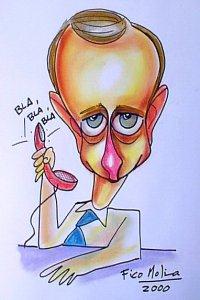
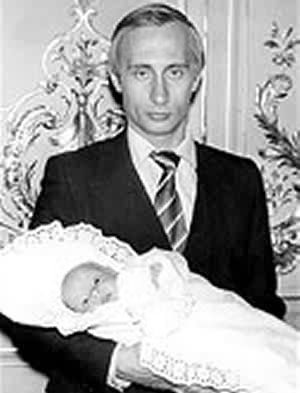
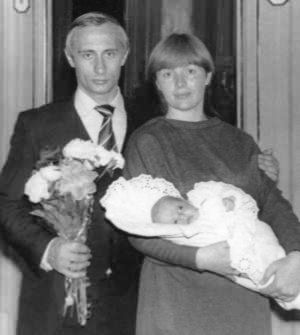
The Sunday Funnies


Would you like to see what I was like when I was
just a tiny little Bolshevik? Let's take a look then shall we?


Sweetie-pie, spawn of the KGB


Did someone say Hitler youth?


Proud papa . . . well, I posed for the photo at least.
The kid's eyes say it all.


The "happy" family. Happy to murder each other maybe . . . or somebody . . .
the baby seems to sense something is amiss if you notice his eyes . . .

German Chancellor Blasts Kremlin Over Khodorkovsky

As YUKOS is forced into bankruptcy and final destruction by the Kremlin, which is even trying to evict YUKOS chairman Mikhail Khodorkovsky's family onto the street, the Moscow News reports that Germany has fired its first Cold War salvo at Russia, attacking the Kremlin's Neo-Soviet treatment of the YUKOS CEO:

German Chancellor Angela Merkel has described the conditions in which one-time Russian oil tycoon Mikhail Khodorkovsky is being held in a Siberian prison as “unacceptable”, Radio Free Europe reports.Merkel says the German government has demanded Russian authorities respect international standards of human rights.Merkel’s comments came in response to a plea from Germany’s opposition Free Democrats for her to raise Khodorkovsky’s case with Russian President Vladimir Putin. Her letter was released by the Free Democrats and published Thursday in the Berliner Zeitung newspaper.In the letter, Merkel says violations of human rights in the prison worry the German government greatly.Khodorkovsky, the former chief of the now bankrupt oil giant Yukos, is serving an eight-year sentence for fraud in the Krasnokamensk prison colony.Many observers believe he was arrested because he represented a political threat to President Vladimir Putin, a claim denied by the Kremlin.Yukos was declared bankrupt by a Moscow commercial court on August 1.

Meanwhile, even the Russian press is condmning "President" Putin for breaking his promise that Yukos would not be driven into bankruptcy.

Khodorkovsky's wife says "they are trying to break" her husband in the most virulent and pathetic form of Neo-Soviet personal attack.

Kremlin Sends Judge to Prison

If the Kremlin was willing to arrest a political foe like Khodorkovsky, steal his company and send him to Siberia, how long did we think it would be before it started sending judges to jail when the questioned Kremlin authority? The day is here, as the Moscow Times reports:

The judge who convicted former Colonel Yury Budanov of strangling a Chechen woman is himself being investigated on swindling charges in possible retaliation for the ruling, his lawyer and human rights activists said Thursday.

The Military Prosecutor's Office has been investigating Judge Vladimir Bukreyev, who lives in Rostov-on-Don, since last year, said his lawyer, Yelena Orlyankina.

Bukreyev convicted Budanov in July 2003 of strangling 18-year-old Elza Kungayeva in Chechnya and sentenced him to 10 years in prison. The high-profile trial was widely seen as a test of Moscow's willingness to crack down on human rights abuses in the region.

A spokesman for the Military Prosecutor's Office confirmed the investigation but refused to comment further, citing the ongoing case.

Bukreyev, who faces up to 10 years in jail if convicted, denies wrongdoing.

Orlyankina said the Military Prosecutor's Office was claiming that Bukreyev accepted $40,000 from a military prosecutor who hoped he would dismiss a case. The prosecutor supposedly obtained the money from a witness who wanted the case closed, but, unable to close the case himself, he purportedly forwarded the money to Bukreyev.

The witness is a former regional Defense Ministry officer, Orlyankina said, citing information she received from the prosecutor's office.

There's no evidence. The entire case is based on the words of these people," she said, referring to the prosecutor and the officer.

Lyudmila Alexeyeva, the head of Moscow Helsinki Group, and Lev Ponomaryov, head of For Human Rights, agreed that the case was without merit.

"The case of Bukreyev is retaliation by the military for the conviction of Colonel Budanov," Alexeyeva said at a news conference attended by the lawyer.

Bukreyev, in a statement handed out to reporters, said only that the investigation was "motivated by the wish to get revenge for my judicial work."

Formally, Bukreyev sided with the prosecution when he convicted Budanov, and he proved to be more lenient than the prosecutors, who asked for 12 years in jail.

Ponomaryov, however, said that even though the prosecutors had charged Budanov, they agreed with a widespread sentiment in the military that he did not deserve punishment. "In the end, the judge decided everything," he said.

Alexeyeva noted that judges had complained of pressure from authorities before. She specifically referred to former Moscow City Court Judge Olga Kudeshkina, who said she lost her job in 2003 after she refused a demand by the court chairwoman.

The Supreme Court sanctioned Bukreyev's arrest last month, Orlyankina said. He remains free as he appeals, however. Also, the Supreme Qualification Collegiate of Judges must authorize the arrest of a judge before he can be taken into custody, she said.

Bukreyev abdicated his judicial powers last year because of the charges. But he remains the first chairman of the North Caucasus Military District Court

Saturday, August 05, 2006

Welcome to the Neo-Soviet Union: The Onslaught of Neo-Soviet Propaganda Begins

A brilliant and terrifying piece from The Economist documents that the tactics of ham-handed Soviet propaganda are not suprisingly alive and well in KGB spymaster Putin's Russia. Naturally, Russians would not abandon these techniques if they believe that the only reason they lost the Cold War was a spot of bad luck. If this sort of propaganda campaign is going on now, how long can it be before the gulag archipelago rises once again behind the Iron Curtain? The piece follows:

SOVIET propagandists were experts in the art of disinformation: planting specious stories in obscure corners of the media, claiming, for example, that the CIA invented AIDS. Now Russia's interests are once again being promoted by information sources that look plausible, at least until you look closely at their antecedents.

Take, for example, the International Council for Democratic Institutions and State Sovereignty (ICDISS), a grand-sounding outfit that says it works on “result-oriented nation-building for new and emerging states”. It produced a report in July supporting international recognition for Transdniestria, a breakaway region of Moldova that has had Russian support and Western disapproval since a brief civil war in 1992.

Slickly produced and heavily footnoted, the report was publicised in Russia and Transdniestria as evidence that influential outside opinion was conceding the case for independence. That would be in sharp contrast to all Western governments' policy to date, which has been trying, rather ineffectually, to reunite Transdniestria with Moldova.

The report says it is based on the work of a bunch of well-known international lawyers, including a serving State Department official, and academics from Stanford, Oxford and Harvard. It implies they attended a conference at the Beacon Hotel in Washington, DC, in April 2006.

The truth is rather different. For a start, the Beacon Hotel has no record of any such conference. None of the supposed outside experts attended it. Those contacted crossly denied involvement, though one, a doctoral student, says he did offer some advice. The ICDISS has now removed the names from the report.

That is puzzling enough. But the ICDISS is even odder. It has no address and no telephone number. Although its website, and an entry on a write-it-yourself encyclopedia, Wikipedia, claim that it was founded in 1999, there is no trace of its activities, or of its supposed staff members, in news databases or the internet before January this year. Since then, it seems to be solely involved in promoting Transdniestria. It claims to be based in America, but does not appear to be a charity there (for more on the ICDISS, see this article).

Its website is registered at a hotel address in Mexico, with a phone that does not answer, and operated from a server in Latvia. And that is positively illuminating compared with the report's other supposed publisher, the Euro-Atlantic Joint Forum Contact Group, which seems to have no existence other than its logo.

The report itself is written in professional legalese, peppered with Latin phrases and confident references to precedent. But some bits read awkwardly, with mistakes (telephone “centrals” rather than “exchanges”) often made by Russians writing in English.

Reached by e-mail, the ICDISS programme director, identifying herself as Megan Stephenson, declined to talk on the telephone, or to give details of ICDISS financing, staff, headquarters or other activities. The group wished to keep a low profile because of its previous involvement in protests in Venezuela, which had led to the arrests of its activists, she explained. A sentence on a dormant Venezuelan opposition website does acknowledge help from the ICDISS, although how, when and where is not clear. “If you wish to reach for the somewhat strained conclusion that our little group of volunteers is a Kremlin front, then so be it, but I again state clearly for the record that this is not the case,” insists Ms Stephenson.

The Transdniestria report is oddly similar to a recently published English-language “psychiatric assessment” of the Georgian president, Mikhail Saakashvili. This claims, falsely, to be endorsed by Western hospitals and research institutes. It portrays the Georgian leader (a Russian bugbear) as a paranoid hot-head.

One plausible conclusion is that the Kremlin is engaged in a new push to support Transdniestria and three similar statelets, as a response to the likely acceptance later this year of independence for Kosovo, a province of Serbia mostly populated by ethnic Albanians. Victor Yasmann, an analyst in Prague, predicts that Russia will invite the four to join the Commonwealth of Independent States, a Russian-led talking shop. That would be a half-way house to their full independence, a gain for the Kremlin and a setback for the West.

Certainly Moldova, poor, weak, divided and neglected like no other ex-communist country, seems to be hotting up. Transdniestrian politicians have blamed Moldovan provocateurs for a bomb attack on a bus in Tiraspol, the capital, that killed eight people on July 6th. Transdniestria will hold another referendum on independence on September 17th. Western countries will not recognise it, but Russia may.

In Moldova proper, the Gagauz minority (Orthodox by religion, Turkish by ethnicity), which is strongly pro-Russian, is restive. It may demand independence too. The economy is reeling from a Russian embargo on its main export, wine—which is also imposed on Georgia. Transdniestria's economy, based on arms, steel and trade (critics say smuggling) is thriving.

Faced with all this, some in Moldova despair of an independent future. Better, perhaps, to abandon dreams of joining a cold-hearted Europe, and fall in with Russia's wishes: a neutral and federal Moldova, with a special status for the Russian language. Others ponder dumping Transdniestria and rejoining kindred Romania, from which they were separated by Stalin in 1940. That idea seemed outlandish, until it was floated last month, with seeming seriousness, by Romania's president Traian Basescu.

Such thoughts are a distraction, argues Andrei Popov, at a think-tank in Moldova. The real task should be to reform the country's dismal justice system, local government and investment climate. Enviability is the best way to stability, not fretting over the means of failure.

Slate Exposes the Neo-Soviet Union

Slate contains a story about the Sarov Technopark at Avangard and how the Neo-Soviet Union, just as Vladimir Putin came to power, still had "closed cities" and denied access to Westerners wanting to view the technpark, part of an ongoing series entitled of items about Russia which can be read at the link. The introduction to the series states: "In contrast to Russia, traveling in Kazakhstan was a pleasure. After being told by every Russian official that we had done everything wrong, it was a relief to visit a country where the government seemed genuinely eager to engage us." The article itself states, with the classic frustration of someone experiencing Russia for the first time: "We were dumbstruck. Why invite foreigners to travel 10 hours by train and car (not to mention the trip to Moscow), only to cancel their visit? We accepted that, as journalists, we wouldn't be allowed inside the closed cities, but to be turned away from an approved visit to an allegedly open facility seemed absurd." Everything old is new again in the Neo-Soviet Union.

NIZHNY NOVGOROD OBLAST, Russia—In late summer of 2000, then U.S. Energy Secretary Bill Richardson traveled to the closed city of Sarov in Russia to unveil an ambitious new project: a "technopark" that would help ensure nuclear weapons designers would never sell their secrets to rogue nations.

"The new Sarov Technopark at Avangard is a successful example of how Russian nuclear weapons scientists and plants of the Cold War era can join private industry in the 21st century," said Richardson at the groundbreaking ceremony.

It seemed like a good idea at the time, when Sept. 11 was another day of the year, WMD was not part of the popular lexicon, and Russia's new president, Vladimir Putin, seemed a promising partner for the United States. Richardson said the U.S. government planned to invest at least $4.5 million in similar projects the following year.

Sarov, formerly known as Arzamas-16, would remain closed to ensure security for sensitive nuclear materials, but an open territory just outside the fence would house the technopark. There, Russian scientists could work in relative freedom with their Western counterparts. The United States helped pay for it, Russia promoted it, and six years later, we were curious to see how the experiment was going.

After being denied permission to go inside the closed city (we had asked to visit the museum, a seemingly innocuous request), we sought an invite to the technopark. While the area was described in public-relations materials as an "open access" zone, it took many faxes, formal letters, and phone calls before we finally won permission. Open access, we learned, does not necessarily mean accessible. Sarov is more than 250 miles from Moscow. We traveled overnight by train to Nizhny Novgorod, known as Gorky in Soviet times and famous as the residence-in-exile of Andrei Sakharov, Soviet dissident and father of the Soviet Union's hydrogen bomb. In the 1980s, Sakharov lived in a flat on Gagarin Street with his wife, Yelena Bonner, and their "housekeeper," a KGB employee who would let security agents in the window to rummage through the apartment.

In Nizhny Novgorod, we hired a Volga taxi that reeked of benzene for the drive to Diveyevo, the village closest to Sarov. Once in the village, we were to use a local pay phone (not our mobile phone) to ring the technopark staff, who would provide further instructions. We weren't quite sure what would happen at that point, though something involving blindfolds seemed plausible. Just a few miles away from our destination, we called the technopark to let them we were running on schedule; minutes later, as we reached the outskirts of Diveyevo, we received a frantic cell-phone call from our assistant in Moscow. The meeting had been canceled.

"But we just spoke to them!" we protested.

We immediately rang the technopark, and a brusque secretary picked up the phone. Every single staff member at the technopark had been summoned to Moscow at the last minute, she explained. No one, except her, was in the building.

Was anyone reachable by mobile? No, they all had their phones turned off. Could we just stop by to see the place? I'm not authorized, the secretary said. Was there was at least some literature available? Again, the answer was no. Someone would contact us in Moscow, and that was the end of the call. We were just outside the gates of Sarov.

We were dumbstruck. Why invite foreigners to travel 10 hours by train and car (not to mention the trip to Moscow), only to cancel their visit? We accepted that, as journalists, we wouldn't be allowed inside the closed cities, but to be turned away from an approved visit to an allegedly open facility seemed absurd.

Of course, it wasn't completely unexpected. Viktor Mikhailov, a former Russian minister of atomic energy who spent his scientific career at Arzamas-16, had warned us that working with closed cities had become "much more complicated" in recent years. "The security services are really tightening the screws," he said.

Part of the explanation lies in the culture of security around Russia's closed cities. It's more than just building fences: The idea is to keep scientists, the best source of WMD expertise, from contact with the outside world.

Elizabeth Turpen, a former congressional staffer, worked on the issue of nuclear proliferation for years, and she recalled the anarchic days of the 1990s, when destitute Russian scientists were said to be job-hunting in places like Iran, Iraq, and North Korea. Keeping Russia's closed cities fenced off was the least bad option, she decided. "In 1999, I came to the conclusion the fences are our friend, because things were so bad," she said.

Is that still true today? While Russia and the United States have cooperated on a lot of initiatives to prevent the spread of nuclear technology, not even the most Pollyannaish diplomat would describe the relationship as warm and friendly. The reason, according to Rep. Curt Weldon, R-Pa., is that the U.S. foreign-policy establishment keeps dropping the ball.

"The Russians try repeatedly to reach out to us and repeatedly are rebuffed by us," he said. "Putin feels rebuffed more and more, so it's natural for him to fall back on the KGB crowd."

Weldon has taken dozens of trips to Russia and says successive administrations have ignored his advice. Whatever the case, cooperation with Sarov has been halting at best. The city is still closed, and the technopark is hardly a magnet for free enterprise. Perhaps the only place in the region that has successfully opened to the outside world is the Russian Orthodox convent in Diveyevo.

We stopped in Diveyevo, nauseated and exhausted after our two-hour ride in the Volga taxi. St. Seraphim of Sarov, a Russian monk and mystic occasionally compared to St. Francis of Assisi, was spiritual leader here in the early 19th century; the nuclear city of Arzamas-16 was built on the grounds of the Sarov monastery. The Soviets shuttered both the convent and neighboring monastery in the 1920s.

Nadezhda, a local guide, took us on a tour of the convent. There wasn't a hint of bitterness in her voice, even as she described how the secret police had used the historic Preobrazhensky Cathedral as an indoor target range. The buildings were now all under renovation, the churches were restored, and devout young couples now strolled the grounds.

In the convent, we forgot our frustration over the failed visit to the "open" technopark and marveled instead at how history can right itself. For a moment, we felt at peace.

But the serenity was short-lived. Back in Moscow, we met one of the technopark's managers in a chance encounter in the offices of the Closed Nuclear Cities Partnership, a U.K.-Russian project. When we described our road trip to one of the directors of the fund, he suddenly remembered that "Elena from Sarov" was in the office that day. A few minutes later, he returned to introduce us to Elena Diyakova, who clearly was not pleased to meet us. She shot us an icy look.

"Oh yes, I heard you came all that way," she said unapologetically, handing us a brochure.

It was a flimsy pamphlet for the technopark, written in stilted English and quoting Putin saying, "Such technoparks is of great social and economic importance." According to the brochure, construction started on Building 2 in 2005, five years after Richardson's visit. They still weren't open for business.

What had happened? Who blocked our visits, and why? Diyakova offered no clue but said to call again next time. Our friend from the conversion fund merely smiled. "You'll never know the truth," he whispered as he escorted her out the door.

US Fires Cold-War Salvo at Russia over Iran

And so it begins. Russia has provoked the world's only superpower into Cold War II out of sheer hubris and stupidity. And think about it: The current president of the U.S. likes "President" Putin. Can you imagine what will happen when a president who doesn't like Putin comes to power? Reuters reports:

MOSCOW, Aug 4 (Reuters) - Russia said on Friday the U.S. State Department had imposed sanctions on two state-owned Russian arms firms, export agency Rosoboronexport and warplane maker Sukhoi, for selling arms to Iran. "This is a clearly illegitimate attempt to make foreign companies work by internal American rules," the Russian ministry said in a statement.

It said the sanctions had been imposed under a U.S. law which penalises companies for working with Iran in the sphere of weapons of mass destruction.

Iran and Russia signed a $1 billion defence deal in December, Russian media said at the time. Russia agreed to supply TOR-M1 ground-to-air missile systems to the Islamic Republic and also agreed to modernise its air force.

Russia is also building an atomic power station at Bushehr on Iran's Gulf coast.

"These sanctions, which the U.S. unilaterally imposes on other countries and their organisations, are an obvious political and legal anachronism," the ministry said. Sukhoi is developing the Russian Regional Jet (RRJ) with U.S. firm Boeing . The statement said the sanctions would stop U.S. companies from working with the two Russian firms.

"The U.S. is punishing its own companies, taking away their possibilities to cooperate with leading Russian companies," the ministry said. LR: "the ministry said" in classic Sovietspeak.

Friday, August 04, 2006

Russia: Pathologically Dishonest

On Tuesday it was reported that huge trove of art had been stolen from Russia's most famous museum, the Hermitage in St. Petersburg. At that time, Russian sources told Reuters the art was worth $5 million.

But by Thursday, when art dealers had had the chance to review the list of items stolen, the estimate was revised upwards slightly: It became $130 million, as the Moscow News reports.

This is just more evidence of Russia's seeming pathological inability to simply tell the truth, even when the truth will inevitably come out and humiliate the country totally. We saw it at Beslan, we saw it at Dubrovka, we have seen it since Ivan the Terrible and we will see it until the end of time, because the Russian people will never stand up and say "NYET!"

Russia is a society founded on the lie as a way of life. It should come as no surprise that such a society has come to verge of extinction.

Neo-Soviet Russia Provoking Conflagration in the Caucuses

Newsweek asks: Is Russia trying to provoke a war on Georgia's border?

Last week saw the latest in a series of flare-ups as Georgian troops moved into the remote Kodori valley in the breakaway region of Abkhazia. The Georgians were chasing local tribal leader Emzar Kvitsiani, who had declared that he'd form a private army to resist Tbilisi's authority. Georgia accuses Russia of encouraging Kvitsiani's mini-rebellion; worse, claim the Georgians, Russia's also helping separatists in another restive province, South Ossetia.

Why would Moscow want to set fire to the Caucasus, especially at a time when conflicts are intensifying from Afghanistan to Lebanon? According to Prime Minister Zurab Zhvania, Georgia's been "enemy number one" to the Kremlin since its pro-Western Rose Revolution in 2003. This year, though, tensions have come to a head. Georgia's President Mikhail Saakashvili recently accused Moscow of being behind a mysterious explosion on a gas line. In May, Russia banned imports of Georgian wine, severely hurting its economy. Now skirmishes in Abkhazia and South Ossetia have come close to rekindling wars against Georgia's breakaway republics.

The Kremlin denies undermining its southern neighbor, claiming it wants only to be the guarantor of various ceasefire deals with Georgia's rebel provinces. The danger is that future clashes could easily involve Russian troops, who are permanently stationed in both Abkhazia and Ossetia as peacekeepers. Any fire fights between Georgian and Russian troops could quickly escalate into something much more serious than a tribal revolt.

Tales from the Racist Russian Horror Chamber

The St. Petersburg Times reports:

Jacques, is a 19-year old medical student from Senagal who studies at St. Petersburg State University. He is not somebody who makes enemies easily. Friendly and easy talk to, Jacques, who like other foreign students interviewed in the wake of the acquital last week of suspects in the race-hate murder of a Congolese student, asked for his full name to not to be published.

Jacques will never forget his first few days in St. Petersburg. Traveling home late on the metro, a group of skinheads began shouting racial slurs as he mounted the escalator. Then they physically assaulted him. Jacques ran for his life. He says this is not the only time this has happened to him.

Amnesty International has described racism in Russia “as out of control.” Nineteen people have been killed in racially motivated attacks this year, according to the Sova Center, a group that monitors extremist activity, and another 166 people have suffered serious injuries.

The news that a St. Petersburg jury last week cleared four suspects of the murder of Congolese student Roland Epassak, the second time in four months that a court has acquitted suspects of hate crimes, came as no surprise to Jacques or many other foreign students from Africa and Asia contacted to this article. For him, “the verdict just shows what we experience every day. That this is an inherently racist country.”

“Back in [the Senegalese capital] Dakar,” he recalls, “I was thrilled when I knew I was coming to St. Petersburg. Russia had been a great friend to Africa in the past and the chance to study in a European university seemed fantastic. I had no idea that racist feeling was so strong here.”

Now he wishes he’d never come.

“No black man should come to this country,” he said. “They’d have to be crazy. I am scared to walk the streets alone, especially after the recent murders.”

African students at the university dormitory on Korableistratelny Ulitsa said that they had experienced violent aggression in St. Petersburg more than once.

Samba, 20, who studies environmental management and is from also from Senegal puts it bluntly: “Russians look at me like dirt. They talk to me like a child. The police treat me as if I’m a drug dealer. And everyone will stab you in the back if you’re black.”

Chatting to Samba in the dormitory lift, it immediately became clear that discrimination is a a daily occurance for balck people in St. Petersburg. As the doors opened on the fourth floor, and a group of young Russian women refused to get in, with one saying loudly “I’m not getting in a lift with a nigger!”

On the sixth floor two, visibly drunk young men, got in. Turning to Samba, they spat on the floor before walking straight out again. “You see? Racism is a fact of life for us,” Samba said.

It is not only black Africans who relate such experiences of life in St. Petersburg. Jee Rao, 21, a South Korean exchange student and fluent Russian speaker, has had similar experiences.

“They treat people who look like us differently,” he said. “I have found it very hard to make Russian friends, though many are very kind. Still even some young people, look at me with disdain as an Asian.”

According to Hu Lee from Beijing racist feelings lurk only just below the surface here.

“Russians do not like people from China. They may be polite, but they do not treat us with the respect and friendliness they would give us if we were white,” he said.

Even some Jewish and Armenian students here for a semester from North America have reported difficulties. Yitzhak, 20, from San Francisco feels nervous.

“I don’t tell people I’m Jewish. I just don’t feel comfortable. The atmosphere here is one of intolerance and open xenophobia,” Yitzhak said.

Pointing at the anti-Semitic graffiti that abounds around Petrogradskaya metro station, Yitzhak just shrugs.

Talking about the issue with Russian students, reveals a great deal of antipathy to the issues raised by xenophobia — and denial. Katya, 18, said “racism does not exist here.”

As attacks have becoming increasingly vicious in character according to the Sova Center, foreign students from Asia and Africa in St. Petersburg are living on edge.

Russian Courts Routinely Deny Bail, Violate Constitution with Impunity

The Moscow Times reports that Russian courts routinely deny the Constitutional right of criminal accuseds to receive reasonable bail, which of course should not surprise anyone given the fact that every other aspect of the Constitution that bears upon civil liberties was ash-canned long ago:

When U.S. businessman and former chess champion Maxim Dlugy went on trial last September, his lawyers asked that he be freed on bail of 500,000 rubles ($18,600).

Solikamsk City Court Judge Galina Imamaliyeva flatly refused.

When it turned out that the prosecutor had no hard evidence against Dlugy, the lawyers upped the ante and offered a bail of $9 million and 48,000 rubles.

Dlugy was charged with attempting to defraud a Perm metals plant of $9 million and of embezzling 48,000 rubles ($1,800), which he had written off as entertainment expenses.

The judge again refused to grant bail.

Dlugy was eventually acquitted and set free, but his case is a glaring reminder of the reluctance of Russian judges to grant bail under most any circumstances.

Even the country's top prison official has admitted that the authorities keep too many innocent people in custody.

"Last year, 65,000 people were released right in court, about 2,000 of them because they did not commit a crime," Federal Prison Service chief Yury Kalinin said in an interview published Friday in state-run Rossiiskaya Gazeta. "This means that these people spent time in detention for nothing and no one bore any responsibility for this."

No official statistics about how often suspects are released on bail could be obtained over the past week, despite numerous calls to various federal law enforcement agencies. Several lawyers interviewed for this report could not recall any instance of a suspect being granted bail, although they noted that judges do release suspects who sign pledges not to leave town.

In comparison, many Western countries, including the United States, prefer bail over detention as a cost-efficient way to deal with suspects.

Some lawyers criticize the Russian method as little more than an attempt to force suspects to admit to crimes.

"Investigators choose arrests because they are unprofessional and usually pressure suspects to confess instead of looking for hard, independent evidence," said Yury Kostanov, a veteran defense lawyer. "An arrest opens the door to a wide array of methods to influence suspects."

A former police investigator said bail is unpopular among law enforcement officials because it requires extra work: Police need to gain permission from prosecutors who, in turn, need to set the amount of the bail. "It is a less habitual thing for us that demands more procedures," said the former officer, who asked not to be identified because he hoped to rejoin the police force one day and did not want his name associated with the disclosure of internal police tactics. "Really, in some cases it is easier to release a person on a written promise not to leave town."

Bail was often granted in tsarist Russia, and the practice continued through the 1920s. However, Josef Stalin quickly turned law enforcement agencies into a tool for repression, rather than justice. Arrests became the only -- and the most brutal -- way of restricting a suspect's actions before a court verdict, said Sergei Vitsin, an analyst with the Independent Council for Legal Expertise, a Moscow think tank. "Also, it turned out that the average Soviet citizen did not have enough property to secure his own bail," he said.

Bail returned under the 2001 Criminal Code, but institutional restraints still hinder its application.

The former investigator summed up the police's side succinctly, saying: "Imagine if a suspect released on bail escapes and the bail goes to the state budget. I get nothing, and my superiors are left with an unsolved case and bad statistics."

A police officer's performance is determined by the number of crimes he solves, a practice that encourages officers to ignore complaints, pressure suspects to confess, and quickly send cases to court.

Dlugy, the U.S. businessman, recalled his disappointment over being denied bail.

"I felt utter despair at that moment, as if I had found myself in the Stalin era," Dlugy, who is now in Moscow, said by telephone Tuesday. "In fact, the system has not changed in the past five decades. Those people did not even understand what bail was about."

The prosecutor and court would have had much less to lose than Dlugy if they had agreed to release him on the $9 million bail, said Dlugy's lawyer, Marina Mikhailova.

"If Dlugy had failed to appear in court just once, all that money would have been funneled to the state budget. But still he was left to rot in jail for another two months," Mikhailova said.

The charges were linked to Dlugy's chairmanship of the Solikamsk Magnesium Works from June to August 2003. His associates said he was accused because the plant's new management wanted to write off debts incurred by previous management.

Dlugy emigrated in the early 1980s from Russia to the United States, where he received U.S. citizenship. He was ranked No. 1 in the World Blitz Chess Association from 1988 to 1993.

One of the best-known cases of bail being denied was of Azeri businessman Fizuli Mamedov, better known as "Frank Al Capone." He was arrested in June 2001 on charges of illegal possession of heroin. During the 18-month trial, his lawyers repeatedly asked the judge to name his price for bail, saying the sky was the limit. The judge refused. Two years after his arrest, he was acquitted and released.

While denying bail to many, the authorities readily post bail when one of their own runs afoul of the law abroad. Former Kremlin property manager Pavel Borodin, for example, was released from a Swiss prison on a bail of 5 million Swiss francs ($3.5 million) provided by the Russian government in April 2001. Borodin was arrested on a Swiss warrant in January 2001 in the United States. He was suspected of involvement in an embezzlement scheme during renovation of the Kremlin by Swiss construction companies. Borodin was eventually fined 300,000 francs plus court expenses of 35,000 francs, which were deducted from the bail. The remainder was returned to the Russian government in 2002. It remains unclear whether Borodin ever reimbursed the government.

Just several days before Dlugy went on trial last September, two Russian diplomats working for the United Nations were arrested in the United States and charged with money laundering in the UN's oil-for-food program in Iraq. One of them, Alexander Yakovlev, did not contest the charges and was released on a $400,000 bail that he paid himself. The second, Vladimir Kuznetsov, denied any guilt and was released after 79 days when the Foreign Ministry paid a bail of $500,000. The investigation concerning the two is still going on.

In the most recent case, the government approached a Swiss judge late last year with a request to release former Nuclear Power Minister Yevgeny Adamov on bail. Adamov was arrested in May on a U.S. warrant accusing him of embezzlement. Bail was denied, but the judge later ruled in favor of a Russian request to extradite Adamov to face charges of fraud and abuse of office. Adamov returned to Moscow in December and was released from custody in July after signing a pledge not to leave town. His trial is expected to start later this month

Thursday, August 03, 2006

Yuri Mamchur: Neo-Soviet Con Man

It's been a big week for wacko Russians in the blogosphere, and that means a bad one for all the rest of us. First the insane Konstantin of Russian Blog accuses the Boston Globe of lying, and now the equally-if-not-more insane Yuri of Russia Blog accuses the Wall Street Journal of lying (Yuri, being perhaps somewhat more personally refined than Konstantin -- and perhaps slightly better schooled in the ways of propaganda and deception -- chooses “this is a straight falsehood” over “this is a lie” – but La Russophobe almost prefers Konstantin’s more blunt approach which, if equally propagandistic, is at least proudly so). Apparently, the only one telling the truth in the world today is the crazed Russian nationalist.

La Russophobe
hadn't intended to ever dirty her hands again with the composer who publishes Russia Blog and feels his musical knowledge entitles him to pontificate about politics (Mamchur regularly publishes the obscene propaganda of Russopsycho Mike Averko), but now a reader has brought to her attention that Russia Blog has published something so extreme, ignorant, dishonest and offensive that she is left with no choice but to bend low and scrape this excrement off the cyber-sidewalk, for the benefit of innocent bystanders that Yuri Mamchur's fecal matter might befoul.

A few days ago, as reported by Jurist, the legal news outlet of the University of Pittsburgh School of Law, "President" Vladimir Putin signed a new law on "extremism. " As Radio Free Europe reported, the bill had been passed by Russia's "parliament" earlier in the month.

This bill is an outrageous step backwards for Russia and has been condemned by all thinking people across the globe. As Jurist reports, the G-8 leaders who convened in Moscow pointedly tried to dissuade Putin from signing the bill.

The Committee to Protect Journalists has condemned the bill, saying: "This measure is reminiscent of the kind of catchall laws that were used in Soviet times to control the media. Those in power can now label any journalist an 'extremist' and effectively stifle critical reporting. The law could result in three years' imprisonment for journalists and potential shutdown of their publications." The World Association of Newspapers (WAN represents 18,000 newspapers; its membership includes 73 national newspaper associations, newspapers and newspaper executives in 102 countries, 11 news agencies and nine regional and world-wide press groups) called for the rejection of the bill. It stated:

In a letter to Russian President Vladimir Putin, WAN and the WEF said the law would "further undermine the role of the press to inform the public and lead to even greater self-censorship than already exists." The Paris-based organisations said the vague language of the law "would allow public officials to interpret the law as they please and effectively target their critics."

The lower house of the Russian parliament, the State Duma, approved the "Law on Fighting Extremist Activity" on 8 July. It now must be considered by the upper house, the Federation Council, before being signed into law by President Putin.

In enacted, the law would broaden the definition of extremism to include media criticism of public officials and provide for imprisonment of up to three years for journalists and the suspension or closure of their publications.

In its letter to Mr Putin, WAN reminded the President of his remarks supporting press freedom made at the World Newspaper Congress and World Editors Forum in Moscow last month. WAN said that passage of the new law "would constitute a clear breach of the right to freedom of expression."

The letter said:

"We are writing on behalf of the World Association of Newspapers and the World Editors Forum, which represent 18,000 publications in 102 countries, to express our serious concern at proposed legislation that provides for up to three years in jail for journalists who criticise public officials and categorises them as ’extremists’.

According to reports, on 28 June the lower house of parliament approved amendments to the Law on Fighting Extremist Activity in a first reading. If enacted, the law would broaden the definition of extremism to include media criticism of public officials and provide for imprisonment of up to three years for journalists and the suspension or closure of their publication. If the bill is passed in two further readings, it would be submitted to the upper house.

"Amendments to Article 1 of the law broaden the definition of extremist activity to include ’public slander directed toward figures fulfilling the state duties of the Russian Federation’, as well as ’interfering with the legal duties of organs of state authorities’.

"We are seriously concerned that this legislation, if enacted, would further undermine the role of the press to inform the public and lead to even greater self-censorship than already exists. We are also concerned that the vague language used would allow public officials to interpret the law as they please and effectively target their critics.

"We respectfully remind you that you told our Congress that ’our people made a conscious choice in favour of democracy. Freedom of the media remains one of the most important guarantees of this choice’.

"We respectfully remind you that, if passed, this law would constitute a clear breach of the right to freedom of expression, which is guaranteed by numerous international conventions, including the Universal Declaration of Human Rights. Article 19 of the Declaration states: ’Everyone has the right to freedom of opinion and expression; this right includes the freedom to hold opinions without interference and to seek, receive and impart information and ideas through any media, regardless of frontiers.’

We respectfully call on you to do everything possible to ensure that the proposed legislation is withdrawn and to ensure that in future your country fully observes international standards of freedom of expression."

As the St. Petersburg Times reports, "even Central Election Commission chief Alexander Veshnyakov criticized the expanded definition of extremism contained in the law." Yuri Mamchur himself admits that the everyone from the Carnegie Foundation to Mikhail Gorbachev has come out in opposition to this disgusting Neo-Soviet attack on civil liberties. Dimitry Babich of Russia profile calls the bill "a dangerous cocktail for democracy." Masha Gessen of the Moscow Times states: "At a restaurant, one of my friends told a Putin joke. Rather, she whispered it. 'Why are you talking like that?' asked another friend. 'The new law on extremism,' she responded, and proceeded to whisper the joke. President Putin signed the bill on extremism into law on Friday evening. It is a venerable post-Soviet tradition, signing controversial legislation on Friday evenings to avoid media coverage. There is virtually no media left, but the habit apparently lives on. In accordance with an even older custom, the Soviet tradition of making an outlaw of every citizen, the new law makes it possible to punish anyone -- including people who tell Putin jokes in public."

But Mamchur? He loves the new law, and according to him anyone who disagrees is a benighted moron, probably ought to be taken out and shot. Basically, the only one who knows anything about Russia it seems is dear Yuri, and anyone who gets his news from any other source needs to be institutionalized and medicated.

Mamchur, commenting on (yet one more) critical story about the bill in the Wall Street Journal by reporter Alan Cummison, states that "given the state of Russian society and the widespread violence we have seen in the streets and the army, I believe that [the bill] may be necessary to prevent a revival of fascism in Russia. Russians do not want to see their country repeat the mistakes of the Weimar Republic in Germany, which in the name of democracy tolerated people who openly vowed to destroy the constitutional order." Cummison, like a host of others (the Boston Globe for example), merely recognized facts everyone already knows when he stated that "approval of the measure on Friday is a fresh rebuke to Western leaders and civic groups who leaned on Mr. Putin at a Group of Eight conference in St. Petersburg this month to stop squeezing opposition parties and freedom of speech. Analysts say Mr. Putin's decision to sign the law is a harbinger for an even greater clampdown on Russian society." Mamchur finds this outrageously inaccurate.

He demonstrates his expertise in the matter by beginning his insane diatribe against what his crazed "mind" sees as the ignorant fools at the Journal, one of the the world's most well-respected newspapers, thusly: "My first response upon reading the title was 'I haven’t heard of such a law or a bill being passed!'" Apparently, if composer Yuri hasn't heard of it, that means it doesn't exist -- or at least, it's not worth knowing about.

Mamchur claims that the Journal made a number of fact errors in reporting on the law, with the first one being "the name of the bill." Oddly, though, nowhere in Mamchur's screed does he say what name the Journal gave the bill.

Mamchur then claims that a person can only be prosecuted under the bill for accusing a public official of being a terrorist without evidence, not for any old reason the Kremlin cares to dream up. Even if this were true, Mamchur seems to live in some alternative universe where Russian courts are not corrupt and the Kremlin cannot call anyone it likes a "terrorist" (Brezhenev certainly thought of Solzhenitsyn and Sakharov this way).

But in fact this is an outrageous and utterly false characterization of the bill, made by someone with no legal training, relying on no authority other than his own "analysis," who is clearly very antagonistic to ignorant Westerners who presume to know what is going on in Russia without asking Mamchur himself (Mamchur haughtily writes at one point: "any Russians will find the sixth paragraph of the WSJ article funny, because it quotes the opinion of a washed-up politician who currently makes his living starring in Pizza Hut commercials" -- referring to Mikhail Gorbachev). There is nothing in the bill which limits its application to those accusing officials of being terrorists; as noted above, the bill applies to any action which results in "interfering with the legal duties of organs of state authorities," a phrase so broad it could apply to virtually anything.

Mamchur wouldn't have embarrassed himself so badly if he'd just read a bit more widely than the intimate circle of Russian propagandists he keeps. As the St. Petersburg Times report noted above states: "Leonid Gozman, deputy chairman of the Union of Right Forces, said Putin’s decision to ignore the criticism and approve the amendments was part of a 'dangerous trend. Almost any sort of political activity could be construed to fit the expanded definition of extremism, as was the case with ‘Trotskyism’ and ‘anti-Soviet activity’ in the Soviet era,' Gozman said." The SPT also reported: "'It’s obviously a crackdown,' said Dmitry Oreshkin, head of the Mercator think-tank. Oreshkin said it was no coincidence that the Duma was considering Kremlin-sponsored changes to the country’s election laws immediately after broadening the definition of extremism. While this new one-two punch provides Putin with a powerful new weapon against possible rivals, Oreshkin said the president would not rush to use it. The new laws will be triggered as necessary,' Oreshkin said. " Mamchur totally ignores all this coverage, as if the Wall Street Journal was out on a crazed limb all alone. As is often the case with wacko Russian nationalists like Mamchur, it's they who are way out there, alone.

Mamchur then goes completely berzerk, a really classic Russian nationalist meltdown. He states: "Calling the Governor of Texas a terrorist probably won’t lead to violence, but deliberately slandering a state official in a country with over 50 nationalities, during a time of rising racial and Islamic fascist sentiment can cause more harm than the ordinary American can imagine." Apparently, Mamchur thinks that Moscow is significantly more racially and ethnically diverse than Texas and that Texas does not suffer from "rising sentiment" of aggression between ethnic and racial groups (all that stuff about building a giant wall on the Texas border, making English the official language, and so forth apparently somehow eluded Mamchur's keen mind). He thinks not only that nobody in the West knows a thing about Russia, but that he knows all there is to know about America. In other words, Mamchur is not from this planet.

But that's not the worst of it. Mamchur then rants: "The second paragraph of the WSJ article says that 'Putin’s decision to sign the law is a harbinger for an even greater clampdown on Russian society…' The WSJ writer forgets, that this bill was written by the Duma (Parliament), approved by the Federal Assembly (Senate) and only then signed by Putin, who currently enjoys a 70% approval rating according to public opinion polling in Russia." So, according to Mamchur, any action taken by the Kremlin is right since the Kremlin is popular. If it wants to rebuild the gulag archipelago, nobody can say a word. He doesn't care to mention that the "Senate" of Russia is not elected but hand-picked by Putin. He doesn't care to notice that the Duma is nothing but a rubber stamp. Or, and this is really scary, maybe he really thinks Russia's legislature is legitimate.

Think it can't get more insane? You'd be wrong. Next comes this jaw-dropper: "In paragraph three, Lilia Shevtsova, a political analyst for the Carnegie Foundation in Moscow, says that 'He [Putin] is signing a law that erases all ability to criticize the authorities and to have any real discussion in the media…' Our response is: this is not true. Please read more about the number of private media outlets in Russia and keep in mind that hundreds of newspapers and online news outlets daily call Putin names and argue that he is too soft a leader." Hmm . . . is that the royal "our" Mr. Mamchur (certainly nobody else's name appears at the bottom of the post)? Did he really say that the existence of newspapers criticizing Putin for being too proves that Russia has freedom of expression? Yes, unbelievably, that's just what he said. Did he just forget that the vast majority of Russians get their news from TV, which never utters a critical peep about Grandpa Putin? La Russophobe doesn't think so.

And there is more, much more. Mamchur goes on to claim that Chechnya is currently "stable and peaceful" (see La Russophobe sidebar list of articles showing how absurd this claim is if you can still see through your tears of laughter) and that it's perfectly OK for the Kremlin to tell newspapers to think up a new name for the Bolshevik party because that name isn't official registered (since the Kremlin does not allow it to register) and to censor the party because it's leader uses foul language in his novels.

Mamchur concludes with this gibberish: "As a Russian, I think it is more prudent to act sooner rather than later, while the economy and approval rating of the Kremlin are still high. Russia’s oil-fueled prosperity may actually be turning back the forces of desperation and hatred: in the last two years the per capita income of Russians has increased by one-third. Old babushkas who fought Hitler’s army, and young Russian businessmen, who want to develop their backward Russian regions have no problem with this bill. They want peace and stability on the streets so that Russians and foreigners alike can feel safe working and investing in Russia."

So let's see now. Russians would have become fascists when their income was $200 per month, but now that it has skyrocketed up to $300 they'll turn away from that idea. All Russians want is "peace and stability" just like the Russians who lived under Stalin and the Germans who lived under Hitler, so if they create a Neo-Soviet Union that implodes in a few decades just like the original, that's their business and none of anybody else's.

Got it?

Wednesday, August 02, 2006

Russia: Selfish to the Nth Degree on Terrorism

Sean's Russia Blog explains the standard by which Russia determines if a group is terrorist or not.

The first element of Russia's definition is: "carrying out activities that set to change the Constitution of the Russian Federation by violence, armed methods, which include a number of terrorist methods."

In other words, in Russia's view the Tamil Tigers of Sri Lanka and the Shining Path of Peru and the Irish Republican Army are not terrorist organizations because they don't care about Russia (or probably even know it exists). In the same way, Hamas and Hezbollah are not terrorists.

If, by this definition, Al Quaeda had nothing against Russia and only wanted to kill Americans in New York City, they would not be terrorists as far as Russians are concerned.

Of course, if the Kremlin actually applied this test, it would find out that Vladimir Putin, who hates the Russian Constitution more than anyone, is the biggest "terrorist" of them all.

Welcome back to the USSR! Russians care about nothing and nobody but themselves, and tell the rest of the world to go to hell. That is, until they start running out of food, or until somebody applies a similar definition to the Chechen rebels and says they are not terrorists. Then everytying changes.

Tuesday, August 01, 2006

Rostelecom Takes a Nosedive

RIA Novosti reports that despite massive oil revenues Russia's core industries are fading into oblivion:


MOSCOW, August 1 (RIA Novosti) - Rostelecom [RTS: RTKM] posted a net profit of $100.67 million according to Russian Accounting Standards in the first half of 2006, down 51.7% from the same period of last year, Russia's largest long-distance telecom services provider said in a news release Tuesday.

The company said its revenue reached $1.07 billion in January-June, up 47.2% from last year's figure, while its pre-tax profit shrank 50.4% to $136.99 million.

EBITDA fell 41.2% year-on-year, to $204.22 million.

International traffic gained 1.2% during the period, with outgoing traffic growing 12.4% and incoming traffic up 27.6%.

Rostelecom's shares are traded on the New York Stock Exchange and the London Stock Exchange.

More Intense Humiliation for Putin's Kremlin: Kazakhstan Bans Launches

RIA Novosti reports on more grievous international humliation for Putin's Kremlin. First Russia destroys more than a dozen international satellites, and now Kazakhstan concludes that Russians can't be trusted to launch rockets on its territory:

ASTANA, August 1, (RIA Novosti) - Kazakhstan has banned launches of Russian Dnepr carrier rockets from its Baikonur space center following a crash on July 27, the head of a Kazakh governmental commission investigating the accident said Tuesday.

A Dnepr carrier rocket carrying a large payload of satellites crashed four days ago shortly after liftoff from the Baikonur space center, which Russia rents from the Central Asian country, due to a first stage engine shutdown.

"Under Point 5 of the 1999 Russia-Kazakhstan agreement on joint actions in the event of accidents at the Baikonur space center, all launches of rocket carriers that crashed are halted," the Kazakh official said.

The Dnepr's wreckage was discovered at Thursday, 150 kilometers (93 miles) from the space center on a steppe, a long distance from any residential buildings. Kazakh officials said there had been no casualties or environmental damage from the accident.

The carrier rocket, a civilian version of the heavy R-36M2 Voyevoda (SS-18 Satan) intercontinental ballistic missile, was launched around midnight Wednesday (8 p.m. GMT), and would have orbited 18 Russian and foreign-made mini-satellites.

Exposing the Crackpots at Russian Blog: The Brilliant Boston Globe on Understanding the Two Basayevs and the Neo-Soviet Union


<-?->


In a July 11 Editorial, the
Boston Globe brilliantly and succinctly encapsulates the demise of Shamil B
asayev (or, one might better say, the two Shamil Basayevs) and what it means for Russia (which is, as in most things, failure and disaster of every kind and description). It lays out facts that few if any Russians seem to be aware of as they hurtle recklessly into a void of hypocrisy and self-delusion from which it is unlikely they shall ever return.

The editorial ran as follows:
THE DEATH OF Shamil Basayev, a Chechen rebel commander responsible for horrific terrorist acts, is being trumpeted by Russian President Vladimir Putin not merely as reprisal for Basayev's atrocities, but as a fatal blow to the Chechen independence movement. Russians who still mourn the 331 people killed in the 2004 Beslan hostage-taking may feel that Putin was vibrating to their own emotions yesterday when he called Basayev's death in a massive -- and possibly accidental -- explosion ``our retaliation for the children killed in Beslan." But the Chechen fight for independence has been going on since the 19th century, and Putin is deluding himself if he believes the elimination of one fierce leader will reconcile Chechens to Russian rule.

Basayev's trajectory illustrates the fallacy of Putin's attempt to expunge the Chechen independence movement by crushing it militarily.

In 1991, Basayev was among those Russian citizens who rushed to the White House in Moscow to protect Boris Yeltsin during the August coup by Communist hard-liners. He then served Russia by going with a band of Chechens to Abkhazia, the pro-Russian province of Georgia, to fight against Georgia's effort to achieve independence from Russia. Shortly thereafter, he became a bodyguard for the first separatist p resident of Chechnya, Dzhokar Dudayev, a former Soviet officer who led the Chechens in their victorious war of 1994-96 against Kremlin forces. In that war, Basayev took part in the defense of the Chechen capital, Grozny. Journalists saw no traces of the remorseless savagery or the Islamist fanaticism that were to characterize his behavior in later years. He was a Chechen nationalist then and, like most Chechens, practiced a temperate, traditional form of Islam. He even ran in Chechnya's 1996 presidential election, losing to the moderate Aslan Maskhadov, whom he then served as prime minister for six months. That was a tragically brief era of independence, moderation, and democracy for Chechnya.

The era may have begun to end for Basayev in 1995, when a Russian air strike killed 11 members of his family in his native village. By 1999, when Basayev led a disastrous raid into neighboring Dagestan -- which Russia seized upon as the rationale for its second invasion of Chechnya -- Basayev had grown a long beard, come under the influence of the rabid Arab Islamist known as Ibn al-Khattab, and plunged into the terrorist maelstrom of beheadings, kidnappings, and hostage-taking.

There can be no excuse and no justification for Basayev's targeting of innocent civilians. But Putin's re conquest of Chechnya has been no less vicious to innocent civilians. Putin's refusal to seek a political solution with moderate Chechen nationalists has created many Basayevs, and some of those are sure to replace the one who was blown up yesterday.
The shockingly crude comments of "President" Putin, devoid of any hint that he is an elected official or recognizes any kind of ethical obligation to set an example for his country, betray the barbaric soul that lies within. Few in Russia, and certainly not Spymaster Putin, remember that intentional Russian attacks on civilian targets in Chechnya wiped out virtually Basayev's whole family. Few in Russia recall that Russia has been seeking to exercise imperial domination over tiny Chechnya for hundreds of years (still without final success). Few in Russia will recognize that while claiming Chechnya is a "part of Russia" such that outside interference cannot be tolerated, no Slavic Russian actually views dark-skinned Chechens as being full-fledged Russian citizens.

And most importantly, apparently nobody in Russia remembers that Basayev used to be Russia's friend. He fought against 1991 coup that would have prevented Putin from ever coming to power, and he fought against Georgian independence. He ran for elected office in Chechnya, accepted defeat without violence, and he did not take up arms in Grozny when Russia attacked his country in 1994. He was, in short, someone that Russia could have used as a bridge to the Chechen extremists if it had wanted peace in the region. Russia is constantly demanding that the United States pursue such negotiation with groups like Hezbollah and Hamas and nations like Iran and Iraq, yet when the shoe is on the other foot Russia not only won't wear that shoe, it throws it out the window after lighting it on fire.

Is it at all surprising that Basayev would turn against Russia when his family was massacred? Did Russia apologize for this dastardly act? Did it take any effort at all to bargain with Basayev when he was trying to be reasonable?

As the Globe clearly states: "There can be no excuse and no justification for Basayev's targeting of innocent civilians. " But it's just as true that there can be no excuse and no justification for Russia's many years of barbaric war in Chechnya, condemned by human rights groups across the globe. Russia was recently convicted by the European Court for Human Rights of outrageous war crimes in Chechnya, and ordered to pay damages. Doubtless, Russia will flout the order of that court, just as the Kremlin has always flouted all ideas concerning the rule of law.

To put it mildly, it's simply imposible for Russians to offer support to Hamas and Hezbollah, Iran and Syria, and at the same time call upon the world to characterize Basayev as the living embodiment of evil. If there is something to be said for dealing and negotiating with Hamas and Hezbollah, then there is something to be said for negotiating and dealing with Basayev. Russia can't have it both ways.

But that won't keep Russophile maniacs from trying. For instance, look at the insane ravings of Russophile wacko Konstantin on Russian Blog. It's insane dishonest drivel like this that gives bloggers a bad name and causes famous institutions of journalism like the Globe to trash us. It's time we put a stop to this kind of outrage.

Russian Blog actually says, in so many words, that the Globe's editor "lies." Not that he makes reckless or irresponsible mistakes, mind you, but that he lies. In other words, Russian Blog apparently knows the mental state of the editor of the Boston Globe?

And what did the Globe allegedly lie about? Actually, that's rather hard to say. If you read the post on Russian Blog, you can clearly see that English isn't the author's first language. So you must wonder whether he even understood what he read in the Globe, and if he did you have to try to figure out for yourself what she (or he, the author is anonymous) is saying.

Here is the quote, which focusses on the second-to-last paragraph of the editorial: "The Boston Globe editor lies here – Basayev invaded Dagestan already with Khattab, already with a long beard and “the maelstrom of beheadings, kidnappings, and hostage-taking” started long before the invasion. When we cannot tell what is the cause and what is the effect, we would hardly understand the bin Laden syndrome."

Note, first, how the autor for some reason managed to avoid mentioning the first sentence of this paragraph at all in his post. It's the one that tells us about Basayev's family being killed. Was it just an accident?

Then try to figure out what the author is saying: Is the author saying that Basayev invaded Dagestan before 1999? That hardly seems possible, but it can't be excluded. Not a single shred of published evidence is cited, much less linked, by the author, so there is no way to be sure.

More likely, the author is contending that Basayev was engaged in a "maelstrom" of terrorist activity "long before" 1999, and claiming that the Editiorial stated he wasn't. Not only does the author fail to offer the reader any evidence of such a pre-1999 "maelstrom," the author is also hideously mischaracterizing what the Globe actually says, which is: "The era [of better behavior] may have begun to end for Basayev in 1995." In other words, there were isolated acts of terrorism on Basayev's part beginning in 1995, but the "maelstrom" did not begin until 1999 with the Dagestan invasion. In fairness, of course, one must ask oneself whether the author of Russian blog even knows what the world "maelstrom" means. It's not likely to be part of his active vocabulary, especially if he learned English from a Russian teacher who had never spent a day living in an English speaking country, which is the norm in Russia). So he could just be guessing.

To properly accuse the Globe even of being mistaken, much less of lying, Russian Blog would need to present a comprehensive review of Basayev's pre-1999 terrorist acts and compare that with another comprehensive review of his post-1999 activity. Yet, there is not a single link in the Russian Blog post to any published account of any terrorist act by Basayev, and the only one the author even mentions in the pre-1999 period is a 1995 hostage-taking at a hospital in Budenovsk. Such events occurring in 1995, of course, are fully consistent with the Globe's position, namely that in 1995 and after Basayev was in transition to becoming a maniac. But for all the reader knows, Russian Blog is basing its claims about Basayev's activities on material published by state-owned Russian media. If so, the very least it owes its readers is to tell them that, and citing the text is obligatory. It's the height of Russian insanity to accuse a world-famous bastion of journalism of "lying" without the slightest attempt to document one's own sources. And in this case, Russian Blog isn't even characterizing the statements of the Globe correctly to start with. The Globe never said Basayev was terror-free before 1995, only that comparing the pre-1995 and post-1999 periods is like comparing apples and oranges. Russian Blog offers not one shred of evidence this statement is incorrect, yet it not only accuses the Globe of being wrong but of lying.

In short, there's no doubt that in 1995 and afterwards Basayev embarked upon a path which lead to becoming the same kind of barbarian that Osama bin Laden is. But the question is: Could Russia have prevented it?

And Russians aren't interested in asking that question, or any other question that would undermine the rise of the Neo-Soviet Union. Russian Blog, like "President" Putin (a career KGB officer who spent his life crafting lies), isn't the least bit interested in the truth. Search through Russian Blog from top to bottom, you won't find a single post criticizing Putin, and you'll find virtually no attempt to source or support factual statements of any kind. What Russian Blog is interested in is propaganda, pure and simple, just like "President" Putin. It's prepared to tell any kind of scandalous lie in order to achieve its end, namely the rationalization of the Neo-Soviet Union.

Before publishing this outrageous post, did the author of Russian Blog write to the post and ask for an explanation? Did he write a letter to the editor and wait to see if it got published? Did he do any research of any kind to substantiate the wild charges made in the post? If so, there is certainly no indication of it in the post itself, which is the exact opposite of the type of example one presumes the author wants the Globe to follow. But of course he didn't, because that would be something like journalism and objectivity, and such things are anathema in Russia.

This kind of knee-jerk, hyperventilated Russian nationalism, blind to everything except the mad desire to protect and defend mother Russia, even from attacks that do not exist, has characterized Russia from the dawn of time. No matter the guise of its regime, it causes Russia to slide further and further into the void.

The Russian Army: Out of Control and Terrifying (but only to its own people)

Writing in the Moscow Times, columnist Alexander Golts exposes the horrifyingly barbaric nature of the Russian armed forces:

"Did a car come?"

"Yes."

"What kind of car?"

"Black."

"What kind of license plate?"

"White."

This was not a conversation between a teacher and a particularly dim child. It took place in a Chelyabinsk military court between the judge and Alexander Anupriyev, the commander of a military unit called as a witness in the Andrei Sychyov hazing case.

Sychyov, a first-year conscript serving at the Chelyabinsk Armor Academy, was the victim of a brutal hazing incident in January that left him with gangrene in his feet and legs. Sychyov's legs and genitals were subsequently amputated.

Before the trial began, the judge had moved the prosecution witnesses to Anupriyev's unit. One by one the soldiers began to recant testimony they had given after talking with a Moscow general, dressed in civilian clothes, who came to the unit.

The judge was trying to ascertain the man's identity from Anupriyev. But the commander sounded like an idiot. Anupriyev couldn't remember the visitor's rank or name even though the visitor's confidential talks with the soldiers had taken place in his own office. There was no paper trail. The visitor's documents were not checked at the gate, supposedly because he arrived in a car with military plates.

In addition to the epidemic of stupidity that has afflicted officers connected with the case, there have been cases of almost saintly forgiveness. Several soldiers who had been the victims of hazing, told the court that they were beaten "for good reasons and not very hard." Prosecution witnesses disappeared for a few days and then reappeared, accompanied by people from the Ministry of Defense. The press had no trouble finding out the mystery man's identity: General Rybakov, chief of the department of information and public relations.

The Defense Ministry is shamelessly interfering in the trial, and the military court doesn't dare put the generals in their place. The same thing happened during the pretrial investigation. Colonel-General Alexei Maslov, commander of the infantry forces, swore to journalists that there was no proof Sychyov had been beaten. Military doctors averted their eyes as they testified about Sychyov's "congenital blood disorder." Sergeant Alexander Sivyakov, who is on trial in the hazing incident, was immediately provided with several lawyers, who are trying to prove that all of Sychyov's problems stem from improper treatment in a civilian hospital.

At first glance, the Defense Ministry doesn't seem to be behaving rationally. Why are high-ranking officers, who cannot possibly be acting without the Defense Minister Sergei Ivanov's sanction, trying to save a sadistic sergeant whose actions cost Sychyov his legs and genitals? From the point of view of public relations it would be wiser to call the incident an unfortunate exception to the rule and hold a fair trial. This would be in keeping with the promises for a just trial given by Ivanov and President Vladimir Putin.

Instead, the military has openly compromised the integrity of the investigation and the trial. Why do the generals care so much about Sivyakov?

They don't. This seems to be a matter of principle. The military bureaucrats know perfectly well that cases like Sychyov's happen every day. But they want to send a message to the public: Don't you dare fight for soldiers' rights. No matter what you do, you'll never be able to prove anything. That's why Sychyov's mother was offered money, why the witnesses are being intimidated, and why officers are made to behave like idiots.

It's not surprising that the Defense Ministry is acting so ham-handedly. The authorities' goal is not to convince the public that they are right and just. No matter how many times Ivanov insists that there is no hazing in 80 percent of military units, the public knows the truth about life in the barracks.

Their goal is different: to intimidate, to show that the top brass have the power to ignore testimony, and enough clout to bury Sychyov's case with impunity. The more obvious the ministry's interference is, the better. The people need to understand that the current system of military slavery will never end.

No one seems to notice that the military bureaucrats are also destroying the basic principles of their profession. How will a subordinate relate to a superior officer who was so scared of his bosses that he acted like a fool? What will anyone who has watched the trial in Chelyabinsk think of the Army?

The brass couldn't care less. They just want another victory over their own people.

Alexander Golts is deputy editor of the online newspaper Yezhednevny Zhurnal.

Annals of the Holy Russian Empire

No sooner did Neo-Soviet Russia block all non-Russian Christians from broadcasting on Russian radio waves than it announced that Orthodox Russian Christianity will soon be taught in Russian schools. As RIA Novosti reports:

The teaching of Orthodox Christianity in public schools will hurt Jews and other minorities in Russia, a Russian Jewish leader has said. Berel Lazar, one of Russia’s two chief rabbis, was quoted Wednesday by JTA as saying in an interview with a Moscow radio station that the introduction in four Russian regions of a new subject called the “Foundations of Russian Orthodox Culture” will “divide children into different classes” and ostracize minorities. Russian Muslims have also been reported to criticize the new subject that will become obligatory in certain regions of central Russia starting Friday. The curriculum change was first reported Wednesday.Russia is a multi-confessional state with the Russian Orthodox Church seen as the most popular religion. Other religions include Islam, Protestantism, Judaism, Buddhism and a number of less popular confessions.